


Why Sofas Sag in the First Place

Essentially a sofa will sag when its surface layers or support system fail to distribute weight evenly anymore. This might be a gradual process due to regular sitting, inferior material, or a fragile frame. The sag may seem very simple on the outside, but most often the real reason is somewhere underneath the sofa cushions.
Common reasons include:
- Worn cushion foam or filling: Foam tends to become less dense after extensive use. Filling with natural fiber can, for example clump become flat, or be displaced.
- Weak seat deck or platform: The foundation underneath the cushions can be susceptible to bending or loss of firmness.
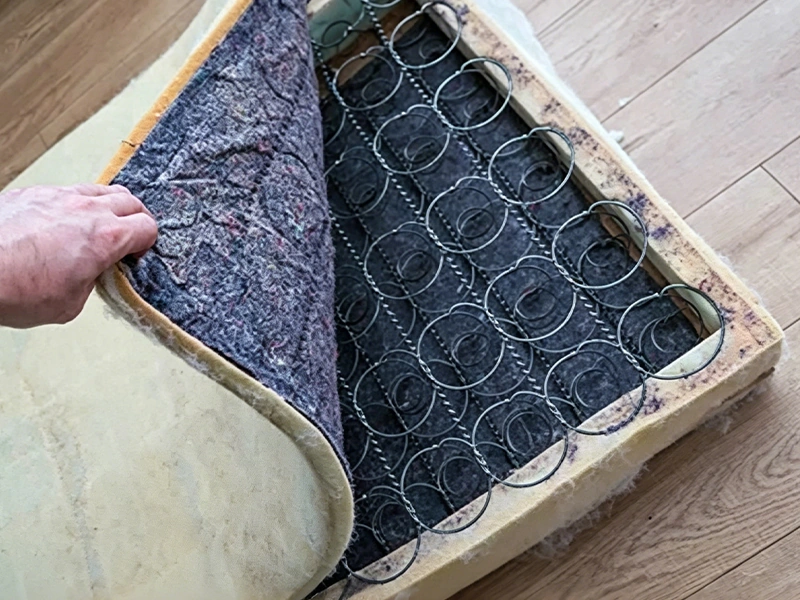
- Broken or detached springs: Apart from the risk of the springs coming loose, you have the possibility of the springs breaking or ceasing their function of distributing the weight in a balanced way.
- Stretched webbing: The straps of the webbing can become slack and the seat will sag.
- Cracked or loose frame:It is the damaged wooden or metal frame that is usually responsible for significant sagging and uneven support.
Knowing the cause first allows you to pick the perfect repair and not waste money on a wrong one.
How to Diagnose a Sagging Sofa in 5 Minutes

Before repairing a sagging sofa, assess the real problem. This easy diagnosis helps you know if you’re dealing with the cushioning, a support problem, or a job for an upholsterer.
Step 1: Remove the cushions
Look at each cushion from the side. If it’s lumpy, flat or depressed in the middle it is often a worn-out foam or filling. The least difficult fix.
Step 2: Press the seat deck
Apply pressure to the seat base underneath the cushions. A soft, loose or depressed deck indicates weak platform, webbing or deck boards.
Step 3: Sit on each seat
Slowly check each position on the sofa by sinking gently into each space. Much lower sags in one area indicate a broken or disconnected spring or support issues.
Step 4: Listen for unusual sounds
Any snapping, popping, scraping or creaking indicates stressed or broken springs, joint failures, or frame tension issues.
Step 5: Inspect underneath the sofa
Check under the sofa if it is possible and safe to do so. Loose black fabric, popped clips, split or broken wooden pieces or springs that appear to be in free fall indicates problems with supports.
Step 6: Choose the right repair path
Most cushion problems can be solved at home, however a saggy deck or loose webbing will likely need a moderate amount of repair. A broken spring, sharp piece of metal, or compromised frame needs to be addressed by a professional.
DIY Fixes for a Sagging Sofa
Once you know what’s making it sag, you can choose your fix. Some are a quick five minute fix. Some involve tools, replacing parts, or bringing in a pro. Start with the cheapest and least likely to be a disaster first.
Flip, Rotate, and Re-Fluff Cushions

If cushions are detachable, turn and rotate them every few weeks to ensure even wear. This will prevent the body weight from being placed on one area of the foam. If you are able, unzip the fiber filled cushions and break apart clumps with your hands to fluff. This will not prevent foam from becoming damaged, but will better the shape.
Add Polyester Fiberfill or Batting

If the cushion still has some support but looks flat, add polyester fiberfill or batting. Fiberfill works well for loose back cushions and soft seat cushions. Batting can wrap around a foam core to restore a fuller look. Add material slowly so the cushion does not become uneven or too tight inside the cover.
Replace the Cushion Foam

When the cushion feels flat, firm, or worn down without spring, usually adding new foam is the way to go. Use high-density upholstery foam so you get a better support. Cover the foam with batting, then place back in cover, to improve pressure distribution. Be accurate with your measurements of the original cushion so your insert fits in well.
Add a Sofa Support Board or Plywood

A support board or plywood panel can help when the seat deck feels weak. Place it under the cushions to create a firmer base. This is a quick fix, not always a full repair. Sand sharp edges and avoid using plywood if springs are broken or metal parts are poking through.
Reattach or Replace Sagging Springs

When a seat appears to be sagging lower than the others, it could be due to either a loose or damaged spring. While you might be able to reattach the spring clip yourself using pliers and some simple tools, a damaged or difficult-to-reach spring should be left to an expert.
Reinforce Loose Frame Joints
Loose screws or weak joints can make the sofa sink or creak. Tighten visible screws and check the legs. If the wood is cracked, split, or unstable, avoid sitting on the sofa until it is repaired.
When Plywood Helps, and When It Makes Things Worse

Plywood works when the seat deck cushion is soft, while the sofa frame and its cushions are intact. It adds more firmness below the cushions and helps to minimize sagging instantly. Thus, this repair is effective for a cheap and temporary solution.
However, plywood might not be an ideal solution as it may cause the sofa to feel too hard, diminish pressure-relief properties, and lead to a lack of evenness of the seating surface. It can also mask problems like broken springs, stretched webbing, and a damaged frame.
Use plywood only when:
- The frame is solid
- No springs are poking through
- The cushions still have some support
- The board edges are sanded smooth
In case the sofa remains saggy despite plywood addition, then it is a clear sign that there is a structural issue.
When to Call an Upholsterer

An upholsterer should be called if the sag appears to be more than just a cushion problem. Excessive sinking in the sofa, broken springs, sharp metal bits, cracked wood, a seat that seems to dip, are all structural issues and may require specialist tools. It can be difficult to assess frame integrity without an upholsterer.
If the sofa is expensive, vintage or has a sentimental value, then an upholsterer would be sensible. An experienced professional can check over frame, webbing, springs, foam and upholstery all together to prevent you fixing one problem only to find you’ve missed another underlying issue.
If the estimate for repair seems to be approaching that of a new sofa, query whether the frame is robust enough to warrant paying a similar price.
How Much Does Sofa Repair Cost?
The cost will vary with the reason for the sag and the size of the sofa and whether you are doing it yourself or paying someone else. Easy fixes will cost the least. Simply flip the cushions or add some batting or fiberfill. Replacing cushion foam or adding a support board will cost more but still will be less than buying a new sofa.
Structural repairs will be more expensive as they require more skill. Stretched webbing, broken springs or frame damage may require a professional upholsterer.
Generally, compare the repair estimate to the quality of the sofa. The frame of the sofa must be solid to warrant an upholsterer. If it is flimsy, then replacement is a better idea.
Simple rule: repair good bones, replace poor structure. If the sofa is well-built, get a repair quote before giving up on it.
How to Prevent Your Sofa From Sagging Again
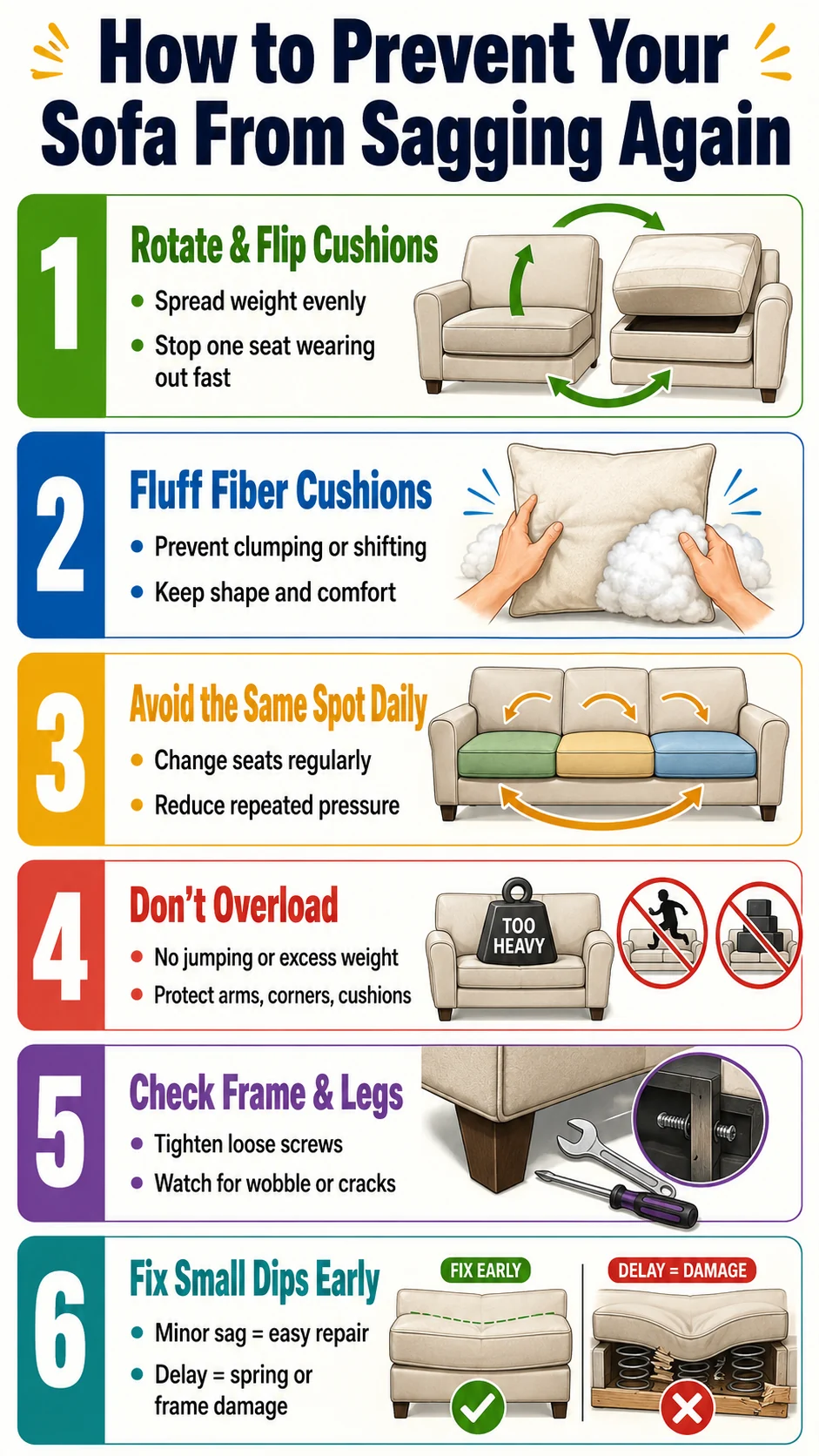
- Rotate and flip removable cushions regularly. This helps spread body weight more evenly, so one seat does not wear out faster than the others.
- Fluff fiber-filled cushions often. This keeps the fill from clumping, flattening, or shifting to one side.
- Avoid sitting in the same spot every day. Changing seats helps reduce repeated pressure on one cushion or spring area.
- Do not overload the sofa. Avoid jumping on it or putting too much weight on one arm, corner, or cushion.
- Check the frame and legs from time to time. Tighten loose screws and look for early signs of wobbling or cracking.
- Fix small dips early. A minor sag is easier to repair than broken springs, stretched webbing, or frame damage.



 English
 Spanish
 Portuguese
 Russian
 Arabic
 Japanese
 Korean
 German
 French
