


What Is Hotel FF&E?

In the hospitality world, FF&E literally translates to Furniture, Fixtures, and Equipment. Think of these as the movable pieces required to actually run a property and furnish its spaces. Basically, hotel furniture, fixtures and equipment cover everything your guests interact with daily. Beds. Chairs. Lighting setups. Even the TVs and desks. They transform empty boxes into cozy, functional rooms ready for check-in. Crucially, unlike the actual building architecture, you can swap, shift, or completely upgrade FF&E without swinging a sledgehammer at the structure itself.
Furniture, Fixtures, and Equipment Explained
This stuff breaks down into three core buckets:
FF&E vs. Building Structure
People constantly mix up FF&E with the building’s actual bones. They are totally different beasts. The building structure is permanent. We are talking walls , floors , ceilings , plumbing , HVAC setups , plus doors and windows.
Conversely, FF&E involves goods that get installed and eventually yanked out when it is time for a refresh.
Simple Example
Picture a standard guest room. The drywall and flooring? Building structure. The mattress, nightstand, reading lamp, and flat-screen? That is your hotel furniture fixtures and equipment. Grasping this distinction is an absolute must for owners and designers trying to map out a sane purchasing and renovation strategy.
Why FF&E Is Important in Hotel Design and Operations

Honestly, FF&E dictates the entire vibe and utility of a hotel. The right bed or desk directly impacts a guest’s comfort level and the property’s overall reputation, not to mention daily staff operations. Picking tough, gorgeous pieces creates great spaces, locks in brand identity, and seriously cuts down on annoying maintenance headaches down the road.
Key Categories of Hotel FF&E
You generally group these assets based on their physical location. Every distinct zone demands specialized gear tailored for its exact use case.
Put simply: FF&E furnishes the joint. OS&E keeps it running day-to-day. A bed is FF&E, but the sheets and little shampoo bottles are OS&E. Knowing this keeps your inventory and FF&E procurement budgets from spiraling into chaos.
Hotel FF&E Procurement Process
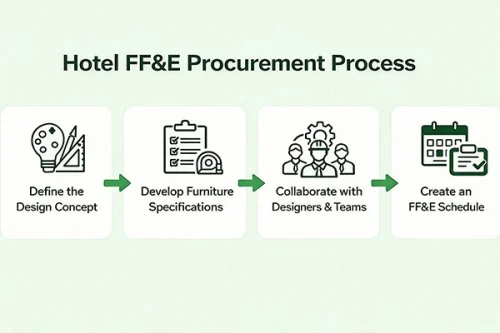
Plotting this out kicks off super early in the design phase. The primary goal? Figuring out exactly what gear is needed, its aesthetic, and where it lives. Solid prep ensures pieces actually fit, match the vibe, and do not hinder the staff.
#1. Define the Design Concept
First up, lock in the overall brand aesthetic. Designers dream up a concept dictating colors, fabrics, and shapes. A beachfront resort might lean into raw woods and breezy chairs, whereas a downtown corporate spot demands sleek, heavy-duty workstations.
#2. Develop Furniture Specifications
Next, the squad writes wildly detailed specs for every single item. This includes exact dimensions , finish materials , upholstery grades , and functional quirks. Bulletproof specs guarantee the final product performs exactly as needed.
#3. Coordinate with Designers and Project Teams
This requires massive teamwork among interior designers , architects , owners , and project managers. Why? To make absolutely sure that gorgeous sofa doesn’t block a crucial electrical outlet or ruin the room flow.
#4. Create an FF&E Schedule
Finally, you build the master list, the FF&E schedule. It details item names , exact quantities , room locations , and size notes. It is your blueprint for getting the place furnished before opening day.
Key Factors When Choosing Hotel FF&E

Picking the right goods is make-or-break. Stuff has to look incredible, survive brutal wear, and be a breeze to clean. Weighing these factors keeps costs down and guests happy.
Durability for Commercial Use
Hospitality use destroys normal furniture. Thousands of strangers will abuse these items yearly. You absolutely need commercial-grade furniture. Hunt for reinforced joints , scratch-proof surfaces , contract-rated fabrics , and bomb-proof hardware. Good build quality stops early replacements dead in their tracks.
Design Compatibility
Everything must mesh with the overarching hotel concept. The fabrics and woods need to sing in harmony with the lighting and wall colors. Pay attention to brand consistency , proper physical scale , and a balanced material palette. Cohesion makes the space memorable.
Safety and Regulatory Requirements
You cannot ignore local safety laws. Furnishings routinely must pass strict fire, tipping, and accessibility tests. Think fire-treated fabrics , ultra-stable bases , and strict building code compliance. Check this early or suffer massive delays.
Maintenance and Cleaning
If housekeeping cannot clean it easily, you will bleed money. Look for stain-repellent fabrics , tough surfaces , and pieces with swap-out cushions. Easy upkeep extends the item’s life immensely.
Cost and Lifecycle Value
Sticker price matters, but lifespan matters more. Cheap garbage breaks and costs a fortune in constant replacements. Smart operators look at lifecycle value, factoring in upkeep and replacement timelines. Solid furniture always wins the long game.
Typical Hotel FF&E Checklist (Room-by-Room)
A basic checklist prevents glaring omissions. Here is what usually goes where.
Hotel FF&E Cost Considerations

This eats a huge chunk of any build budget. Usually, folks calculate this per room, factoring in a slice of the public area costs too.
Average FF&E Investment Per Room
Budgets are heavily driven by the “cost per key” metric. The final tally swings wildly based on the star rating and bespoke design elements.
Key Factors Affecting FF&E Costs
What drives the price up? Material quality like solid wood vs. cheap laminate. Commercial durability upgrades. Wildly custom designs. The sheer volume of pieces. Oh, and do not forget brutal shipping and install fees.
Custom Furniture vs Standard Furniture
You basically choose between bespoke creations or off-the-shelf contract pieces. Custom gives you total aesthetic dominance. Standard is miles cheaper and arrives way faster. It all depends on your cash and your calendar.
Choosing a Hotel FF&E Supplier

Nailing the vendor choice is critical. A rock-solid partner hits your deadlines, respects the design, and delivers quality. Keep these traits in mind.
Manufacturing Capability
They better have a track record of building legit commercial stuff. You want strong joints and materials that meet hospitality specs. Always demand physical samples and check their past work.
Customization Options
Sometimes you need pieces tweaked to fit a weird corner or brand guideline. A worthy vendor offers custom dimensions , unique finishes , wide fabric choices , and design tweaks. This ensures things actually fit the room.
Production and Delivery Capacity
Hotels need hundreds of items dumped on-site at exactly the right moment. Can they handle massive volume? Are their lead times trustworthy? Can they juggle messy logistics? Good shipping ops save you from opening day disasters.
Project Support
The best suppliers hold your hand the whole way, chatting directly with your architects and designers. This limits screw-ups and gets things installed exactly as planned.


 English
 Spanish
 Portuguese
 Russian
 Arabic
 Japanese
 Korean
 German
 French
