


How a Hybrid Mattress Is Constructed

A hybrid mattress uses a layered design that combines cushioning materials with a supportive coil system. These layers work together to provide comfort, pressure relief, and stable support.
Most hybrid mattresses include three main layers: a comfort layer, a transition layer, and a coil support core.
Main Layers of a Hybrid Mattress
Comfort Layer
The comfort layer sits on top of the mattress and cushions the body. It helps relieve pressure on areas like the shoulders, hips, and lower back. Common materials include memory foam, latex, or polyfoam.
Transition Layer
The transition layer sits between the comfort layer and the coils. It helps prevent the body from sinking too deeply and supports proper spinal alignment.
Support Core
The base of a hybrid mattress is the support core, usually made of individually wrapped pocketed coils. These coils provide strong structural support, improve airflow, and help the mattress respond to body movement.
How Long Does a Hybrid Mattress Last?

A hybrid mattress typically lasts about 7–10 years. The lifespan depends mainly on the quality of the materials, including the foam comfort layers and the pocketed coil support system. Hybrid mattresses made with higher-density foam, durable latex, and well-built coils tend to last closer to the upper end of this range.
Key Features of Hybrid Mattresses

Hybrid mattresses combine foam or latex comfort layers with a pocketed coil support system. This layered design helps balance pressure relief, airflow, and responsive support.
Balanced Comfort and Support
Hybrid mattresses provide a balance between cushioning and structural support. The foam or latex comfort layers contour to the body to reduce pressure, while the pocketed coil base supports body weight and helps maintain neutral spinal alignment during sleep.
Pressure Relief for Shoulders and Hips
The comfort layers in a hybrid mattress help distribute body weight evenly, which reduces pressure on areas like the shoulders, hips, and lower back. This cushioning effect can improve comfort for side sleepers and people who experience joint sensitivity.
Improved Airflow and Temperature Regulation
Hybrid mattresses often sleep cooler than many all-foam beds. The pocketed coil system creates open space inside the mattress, allowing air to circulate and helping release body heat during the night.
Enhanced Edge Support
The coil support core typically strengthens the perimeter of the mattress, creating more stable edge support. This allows sleepers to sit or lie near the edge without excessive sinking and increases the usable sleep surface.
Responsive Surface for Movement
Hybrid mattresses feel more responsive than many memory foam beds because the coil system quickly adapts to pressure changes. This responsiveness helps sleepers change positions more easily, which is beneficial for combination sleepers who move during the night.
Pros and Cons of Hybrid Mattresses
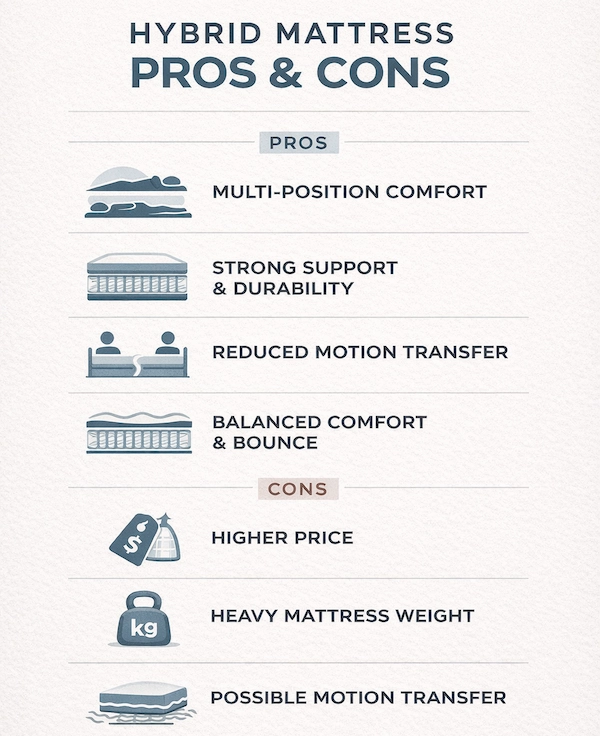
Hybrid mattresses combine foam comfort layers with a pocketed coil support system, offering balanced pressure relief and support. Like any mattress type, they also have a few limitations.
Pros
- Works for Multiple Sleeping Positions
The combination of contouring foam and supportive coils helps accommodate side, back, and combination sleepers. - Strong Support and Durability
The pocketed coil system provides structural stability and often improves the mattress’s lifespan compared with many basic foam mattresses. - Better Motion Isolation for Couples
Individually wrapped coils help limit motion transfer, which can reduce sleep disturbances when a partner moves during the night. - Balanced Comfort and Responsiveness
Hybrid mattresses combine pressure relief from foam with the responsive feel of springs, making it easier to move and change positions.
Cons
- Higher Cost
Hybrid mattresses often cost more than basic foam or traditional innerspring mattresses because they use multiple materials and more complex construction. - Heavier Weight
The combination of foam layers and steel coils makes hybrid mattresses heavier, which can make moving or rotating the mattress more difficult. - Motion Transfer in Some Models
While pocketed coils reduce movement, lower-quality hybrids may still transfer some motion compared with dense memory foam mattresses.
Hybrid Mattress vs Other Mattress Types

Hybrid mattresses combine foam comfort layers with a pocketed coil support system. Compared with other mattress types, they offer a different balance of pressure relief, responsiveness, and airflow.
Who Should Buy a Hybrid Mattress?

Hybrid mattresses combine pressure-relieving comfort layers with supportive pocketed coils, making them suitable for different sleep positions while maintaining airflow and responsiveness.
- Best for Side Sleepers
Side sleepers often place more pressure on the shoulders and hips. Hybrid mattresses usually include foam or latex comfort layers that cushion these pressure points while the coil base supports the spine. This combination helps reduce pressure buildup and keeps the body properly aligned. - Best for Back and Stomach Sleepers
Back and stomach sleepers typically need stronger support to keep the spine from sinking too deeply. The pocketed coil system in a hybrid mattress provides stable support under the hips and lower back, helping maintain a neutral spinal position during sleep. - Ideal for Couples
Hybrid mattresses are often a good option for couples. The foam comfort layers help reduce motion transfer, while the coil support system keeps the mattress responsive when changing positions. Many hybrid models also offer strong edge support, allowing couples to use more of the bed surface comfortably. - Good for Hot Sleepers
People who tend to sleep warm may benefit from a hybrid mattress. The coil support core creates open space inside the mattress, allowing air to circulate more easily than in many all-foam beds. This airflow helps reduce heat buildup and can create a cooler sleep environment.
How to Choose the Right Hybrid Mattress

Not all hybrid mattresses feel the same. Differences in materials, firmness, and construction can affect comfort and support. Understanding a few key factors can help you choose a hybrid mattress that suits your sleep needs.
Understanding Firmness Levels
Firmness describes how soft or firm a mattress feels when you lie on it. Most mattresses use a 1–10 firmness scale, where 1 is very soft and 10 is very firm.
- Side sleepers often prefer softer to medium firmness (around 4–6) for better pressure relief.
- Back sleepers usually benefit from medium to medium-firm mattresses (around 5–7) for balanced support.
- Stomach sleepers typically need firmer support (around 6–8) to keep the hips from sinking too deeply.
Choosing the right firmness helps maintain proper spinal alignment, which can improve comfort and reduce strain on the back.
Coil Count and Coil Quality
The coil system forms the support core of a hybrid mattress. Pocketed coils are commonly used because they move independently and provide targeted support.
Two factors often affect coil performance:
- Coil count: More coils can help distribute body weight more evenly across the mattress.
- Coil gauge: This refers to the thickness of the steel wire. Lower gauge numbers usually indicate thicker, firmer coils, while higher numbers indicate thinner, more flexible coils.
A well-designed coil system improves support, durability, and airflow.
Foam Density and Materials
The comfort layers in a hybrid mattress are usually made from memory foam, latex, or polyfoam. The quality of these materials can affect durability and comfort.
Higher-density foams generally provide:
- better durability
- more consistent support
- longer mattress lifespan
Latex is often valued for its responsiveness and durability, while memory foam is known for its pressure-relieving contouring.
Mattress Thickness and Construction
Hybrid mattresses are typically 10–14 inches thick, depending on the number and type of layers used.
Thicker mattresses often include deeper comfort layers and a stronger support core, which can improve cushioning and durability. However, the best choice depends on factors such as body weight, sleep position, and personal comfort preferences.
Conclusion
A hybrid mattress combines foam comfort layers with a pocketed coil support system to deliver balanced support, pressure relief, and airflow. This design suits many sleep styles. If you are considering a hybrid mattress, explore our collection, crafted with quality materials and thoughtful construction to help create a more comfortable and supportive sleep environment.


 English
 Spanish
 Portuguese
 Russian
 Arabic
 Japanese
 Korean
 German
 French
