


What Is a Panel Bed?

A panel bed is a bed frame with a headboard, footboard, and side rails that create a sturdy frame for a mattress. The name comes from the flat panels often built into the headboard or footboard.
Most panel beds use slats or support bars to hold a box spring or foundation, which then supports the mattress. This structure provides stable support and keeps the mattress in place.
Panel beds are commonly used in traditional bedroom furniture and are known for their strong frame and classic design.
Main Parts of a Panel Bed
A panel bed is made of several structural parts that work together to support the mattress and keep the frame stable. Each part has a specific role in the bed’s construction.
Note: Higher-quality panel beds often include a center support rail with extra legs, especially in queen and king sizes. This helps prevent sagging and improves overall durability.
How a Panel Bed Works

A panel bed supports the mattress using a layered support system. The mattress sits on a box spring or foundation, which rests on slats or support bars inside the frame. This structure helps distribute body weight evenly across the bed.
The box spring also absorbs pressure and reduces direct stress on the mattress. In larger beds such as queen and king sizes, many panel beds include a center support rail with extra legs. This added support helps prevent sagging and keeps the bed stable over time.
Types of Panel Beds
Panel beds come in several styles based on materials, design, and added features. While the basic structure stays the same, these variations change the look, comfort level, and functionality of the bed.
#1. Wooden Panel Beds

Wooden panel beds are the most traditional and widely used type. They are often made from solid wood or engineered wood such as oak, maple, pine, or walnut.
Common features include:
- Strong and durable construction
- Natural wood grain and classic finishes
- Decorative panels in the headboard and footboard
Because of their strength and timeless appearance, wooden panel beds are popular in traditional, farmhouse, and classic bedroom styles.
#2. Upholstered Panel Beds

Upholstered panel beds feature a headboard or panels covered with fabric, leather, or faux leather. Padding is usually added under the upholstery to create a softer surface.
Benefits of upholstered panel beds include:
- Comfortable back support for reading or sitting in bed
- A softer and more relaxed bedroom look
- A wide range of colors and fabrics
These beds work well in modern, contemporary, and transitional bedroom designs.
#3. Metal Panel Beds

Metal panel beds use steel or iron frames instead of wood. The panels often include decorative bars, curves, or geometric patterns.
Typical advantages include:
- Lightweight but strong frame construction
- Decorative and vintage-style designs
- Easy maintenance and durability
Metal panel beds are often used in industrial, vintage, or minimalist bedrooms.
#4. Storage Panel Beds

Storage panel beds combine the traditional panel frame with built-in storage. Drawers are usually placed in the base or under the side rails.
Key benefits include:
- Extra storage space for bedding or clothing
- Better organization in smaller bedrooms
- Efficient use of under-bed space
These beds are especially useful in apartments or rooms with limited storage.
#5. Wingback or Tufted Panel Beds
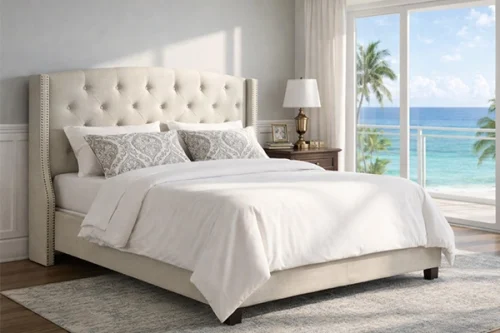
Wingback or tufted panel beds are decorative versions of upholstered panel beds. The headboard may include side wings or button tufting for added detail.
Design characteristics often include:
- Tall upholstered headboards
- Tufted fabric patterns for texture
- Elegant or luxury-style appearance
These beds are often used to create a dramatic focal point in the bedroom.
Panel Bed vs Platform Bed

Panel beds and platform beds may look similar at first, but they support the mattress in different ways. Understanding the differences can help you choose the right bed frame for your mattress and bedroom style.
In simple terms, the main difference is how the mattress is supported. A panel bed uses a box spring or foundation as part of the support system, while a platform bed has a built-in base that holds the mattress directly.
Pros and Cons of Panel Beds

Panel beds are popular because they offer strong support and a classic bedroom look. However, they also have a few practical limitations to consider.
Pros
- Strong mattress support
The mattress sits on a box spring or foundation inside a solid frame, which helps keep the bed stable. - Works well with heavier mattresses
Panel beds can support hybrid and innerspring mattresses that tend to weigh more. - Comfortable bed height
The box spring raises the mattress higher off the floor, making it easier for many people to get in and out of bed. - Decorative design
Headboards and footboards often feature detailed panels that add style and make the bed a focal point in the room.
Cons
- Usually requires a box spring or foundation
This can increase the overall cost and height of the bed. - Larger frame size
The headboard and footboard can take up more space, which may not work well in smaller bedrooms.
How to Choose the Right Panel Bed

Choosing the right panel bed depends on your room size, mattress type, and preferred style. A few simple checks can help you pick a frame that fits your space and supports your mattress properly.
#1. Consider Your Bedroom Size
Panel beds include a headboard and footboard, so they usually take up more space than simpler frames. Measure your room before buying to make sure the bed fits comfortably.
Leave enough space around the bed for walking and for furniture such as nightstands or dressers.
#2. Match the Bed to Your Mattress
Most panel beds use a box spring or mattress foundation. Make sure the frame works with your mattress.
- Innerspring mattresses commonly use a box spring.
- Hybrid mattresses may also need a foundation for proper support.
Check the mattress manufacturer’s guidelines to ensure correct support and durability.
#3. Choose the Right Material
Panel beds come in several materials.
- Solid wood offers strong construction and a classic look.
- Upholstered panels provide a soft surface for sitting up in bed.
- Metal frames are lighter and easy to maintain.
Choose a material that fits your bedroom style and durability needs.
#4. Check Frame Strength and Support
Look for strong side rails and a stable support system. Queen and king panel beds should include a center support rail with extra legs to prevent sagging.
#5. Consider Bed Height
Panel beds usually sit higher off the floor because they use a box spring. Make sure the height feels comfortable when getting in and out of bed.
Conclusion
Panel beds offer strong mattress support, a sturdy frame, and a timeless design that fits many bedroom styles. Their structured build makes them a reliable choice for long-term comfort and stability.
If you’re upgrading your bedroom, explore our collection of high-quality panel beds. Our designs combine durability, comfort, and elegant style, helping you create a bedroom that looks beautiful and supports better sleep every night.


 English
 Spanish
 Portuguese
 Russian
 Arabic
 Japanese
 Korean
 German
 French
