


Why Mattress Type Matters for Adjustable Beds

Adjustable beds can improve comfort, reduce pressure on the body, and support better sleep posture. But to get these benefits, the mattress must work properly with the adjustable base. Some mattresses bend easily and keep supporting your body, while others resist bending or lose their shape over time.
Choosing the right mattress type ensures the bed can move smoothly while still keeping your spine aligned and pressure points supported.
Best Mattress Types for Adjustable Beds
Not every mattress works well on an adjustable base. The best options are made from flexible materials that can bend repeatedly without losing support. These mattresses adjust with the base while continuing to support the spine and relieve pressure on the body.
Memory Foam Mattresses

Memory foam is one of the most compatible mattress materials for adjustable beds. It bends easily with the base and closely contours to the body, helping reduce pressure on areas like the shoulders, hips, and lower back.
When the adjustable base raises the head or feet, memory foam adapts smoothly to the new position. This allows the mattress to maintain even support and spinal alignment, which can improve comfort for many sleepers.
Memory foam mattresses are also known for excellent motion isolation, making them a good choice for couples.
Latex Mattresses

Latex mattresses are another strong option for adjustable beds. Natural latex is both flexible and resilient, meaning it bends easily while still providing a responsive, supportive feel.
Compared with memory foam, latex tends to feel more buoyant and breathable, which can help sleepers who prefer a cooler or more responsive mattress surface.
Latex is also known for its long durability, making it a popular choice for people who want a mattress that maintains its shape over time.
Hybrid Mattresses

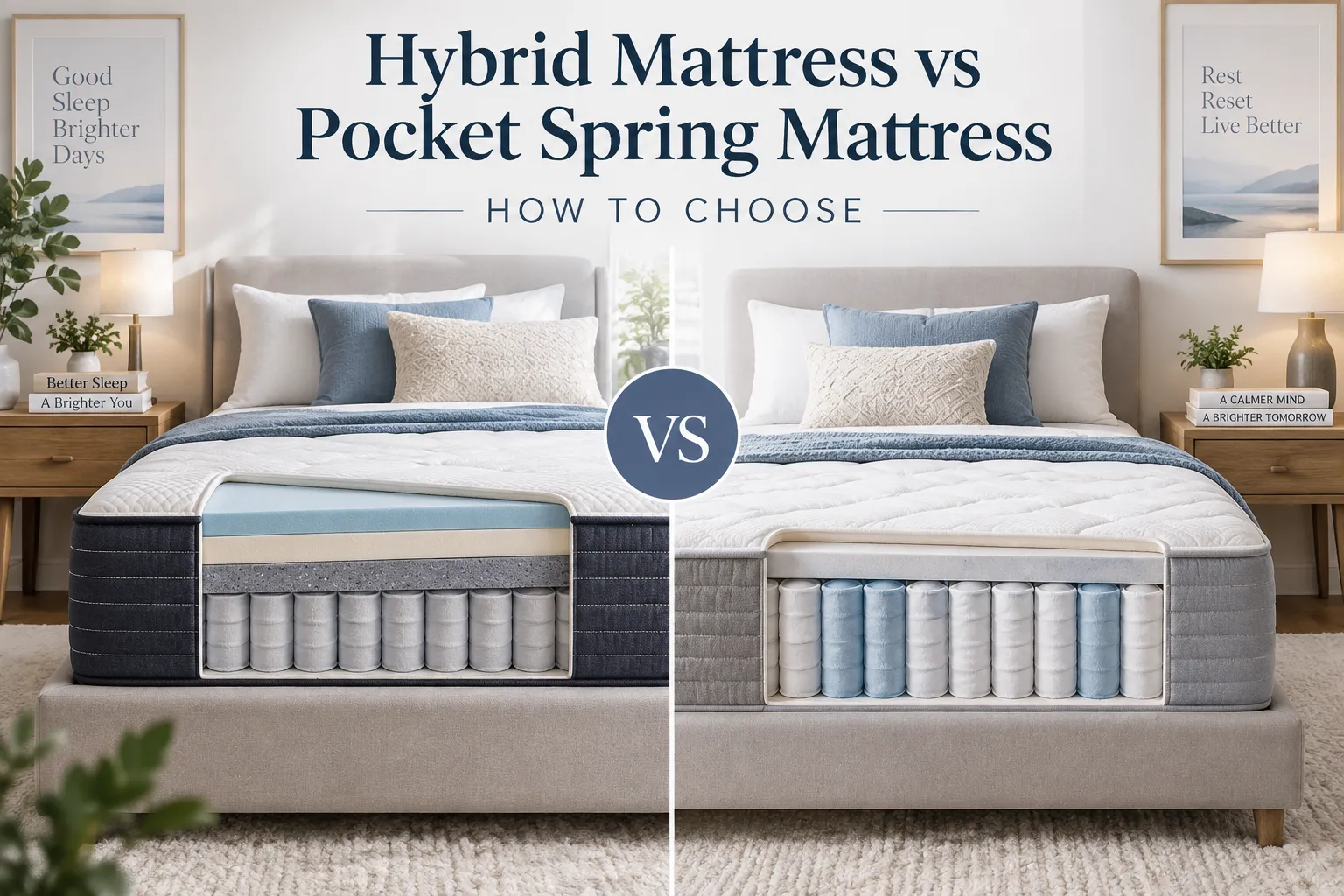
Hybrid mattresses combine foam comfort layers with pocketed coils. Many modern hybrids are designed to work with adjustable bases, especially those that use individually wrapped coils instead of rigid spring systems.
The foam layers provide pressure relief, while the coil layer adds support, airflow, and a more responsive feel than all-foam mattresses.
However, not all hybrids are equally flexible. Thicker or very firm hybrid models may not bend as easily, so checking compatibility with adjustable bases is important.
Mattress Types to Avoid with Adjustable Beds
Adjustable beds require a mattress that can bend easily with the base. Mattresses that are too rigid or overly thick may not flex properly, which can reduce comfort and cause the mattress to wear out faster.
Below are mattress types that generally do not work well with adjustable beds.
Traditional Innerspring Mattresses

Traditional innerspring mattresses use interconnected coil systems that create a rigid internal structure. These coils are designed to stay flat, which makes them less capable of bending with an adjustable base.
When repeatedly forced to bend, the coil system may lose its shape or create uneven support across the mattress surface. This can lead to discomfort and shorten the lifespan of the mattress.
Common issues with traditional innerspring mattresses on adjustable beds include:
- Limited flexibility when the base moves
- Increased wear on the coil system
- Uneven support when the bed is elevated
Some newer mattresses use individually wrapped coils, which are more flexible. These are often found in hybrid mattresses and may work better with adjustable frames.
Extra-Thick or Very Firm Mattresses

Mattresses that are very thick or extremely firm can also struggle to work with adjustable bases.
A thick mattress has more material layers, which can make it harder for the mattress to bend smoothly when the head or foot of the bed lifts. Very firm mattresses may resist bending altogether, reducing the effectiveness of the adjustable base.
Potential problems include:
- Reduced flexibility when the base adjusts
- Less comfortable elevation positions
- Added strain on the mattress materials over time
For most adjustable beds, mattresses between 8 and 14 inches thick tend to perform best because they provide enough support while still bending easily.
Key Features to Look for in an Adjustable Bed Mattress

Choose a mattress that bends easily and maintains support on an adjustable base. Key factors include flexibility, thickness, and support.
Flexibility
Flexibility is the most important requirement for an adjustable bed mattress. The mattress must bend smoothly as the base raises or lowers different sections.
Materials like memory foam and latex work well because they adapt to movement without damaging their internal layers. A mattress that is too stiff may resist bending and wear out faster.
Mattress Thickness
Mattress thickness affects how easily the mattress bends and how well it supports the body.
For most adjustable beds, the ideal thickness is 8–14 inches. This range provides good support while still allowing the mattress to flex properly.
Support and Pressure Relief
Even when the bed is elevated, the mattress should keep the spine in a neutral position and reduce pressure on the body.
When the head or legs are raised, body weight shifts toward the lower back, hips, and shoulders. A supportive mattress helps distribute this pressure evenly.
How to Choose a Mattress for an Adjustable Bed

Choosing the right mattress for an adjustable bed is not only about comfort. The mattress also needs to work smoothly with the adjustable base and stay supportive over time. When comparing options, focus on compatibility, durability, and personal comfort.
Check Adjustable Base Compatibility
Before buying a mattress, make sure it is compatible with adjustable bed frames. Many modern mattresses are designed to flex with adjustable bases, but some older or rigid models may not work well.
To confirm compatibility:
- Check the manufacturer’s product description
- Look for mattresses labeled “adjustable-base compatible”
- Review warranty details, since some warranties require proper base support
Choosing a mattress designed for adjustable beds helps ensure smooth movement and proper support.
Consider Mattress Durability
Adjustable beds move frequently, so the mattress must handle repeated bending without losing its shape.
Durable materials help the mattress last longer and maintain consistent support. Look for mattresses made with:
- High-density memory foam
- Natural or synthetic latex
- Quality hybrid constructions with flexible pocketed coils
These materials tend to maintain their structure even after years of regular adjustments.
Evaluate Comfort Preferences
Comfort still plays an important role when choosing a mattress. The best firmness level depends on your sleep position, body weight, and personal preference.
In general:
- Medium to medium-firm mattresses work well for most sleepers
- Softer mattresses may feel better for side sleepers
- Slightly firmer options often support back sleepers more effectively
Testing a mattress during a sleep trial period can help you determine whether it provides the comfort and support you need with your adjustable bed.
Conclusion
In summary, the best mattresses for adjustable beds are flexible, supportive, and durable. Memory foam, latex, and compatible hybrid designs bend smoothly with the base while maintaining pressure relief and spinal alignment. Choosing the right mattress ensures your adjustable bed performs comfortably and lasts longer.
If you’re upgrading your adjustable bed setup, consider a mattress designed for flexibility and long-term support. Our brand offers adjustable-base compatible mattresses built with quality materials, balanced comfort, and reliable durability to help you get the most out of your adjustable sleep system.


 English
 Spanish
 Portuguese
 Russian
 Arabic
 Japanese
 Korean
 German
 French
