

Ever wake up sore or stiff and wonder if your mattress might be the reason?
Getting a good night’s sleep starts with choosing the right mattress firmness level.
A medium mattress gives you that just-right balance of comfort and support, while a firm mattress feels sturdier and keeps your spine aligned.
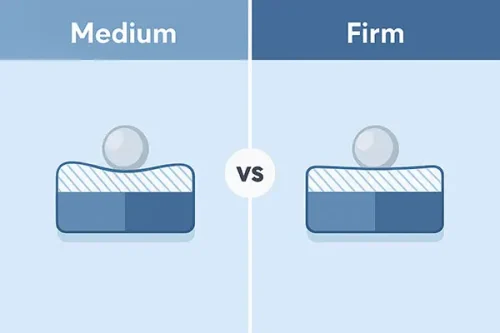
The right choice depends on your body type, sleeping position, and how much cushioning feels good to you.
Picking the right firmness can ease back pain, improve posture, and help you wake up refreshed.
In this guide, we’ll break down the difference between firm and medium mattresses so you can find the one that fits your sleep style best.
Understanding Mattress Firmness

The mattress firmness scale runs from 1 to 10, with soft around 3–4, medium at 5–6, and firm near 7–8.
What feels firm to one person might feel softer to another — it depends on your body weight, sleeping position, and mattress materials.
And here’s the key: firmness isn’t the same as support.
Firmness is how the mattress feels, while support is how well it keeps your spine aligned all night.
Key takeaway: Most people find comfort in the medium to medium-firm range, which offers the perfect mix of cushioning and stability for better sleep and less morning stiffness.
What Is a Medium Mattress?

A medium mattress sits right in the middle of the firmness scale — not too soft, not too firm.
It offers a balanced mix of comfort and support, allowing your body to sink in just enough to relieve pressure without losing proper alignment.
It’s especially ideal for side sleepers and back sleepers because it cushions the shoulders and hips while keeping the spine in a healthy position.
If you share a bed, a medium mattress is often the best choice for couples with different preferences, providing a comfortable middle ground for both.
Best for: Sleepers weighing 130–230 lbs, or anyone looking for a mix of gentle contouring and steady support that works well across different sleep positions.
What Is a Firm Mattress?

A firm mattress has a sturdier, more supportive feel with very little sink when you lie down.
Instead of letting you “sink into” the surface, it keeps your body lifted and aligned, which helps maintain proper spinal posture all night long.
This type of mattress works best for stomach sleepers, back sleepers, and heavier individuals who need extra support to prevent their hips or lower back from sinking too deep.
It’s also a solid choice if you prefer sleeping “on top” of your bed rather than “in” it.
In simple terms, a medium mattress gives you that “just right” balance of comfort and support, while a firm mattress focuses on stability and posture correction.
The best choice depends on what your body needs most — a little more softness for comfort, or a little more firmness for strength and alignment.
Choosing Between Firm and Medium
When it comes to picking between a firm or medium mattress, the best choice depends on how you sleep, your body type, and any pain or comfort issues you might have.
Here’s how to narrow it down:
By Sleeping Position

- Side sleepers: A medium mattress works best. It cushions your shoulders and hips while keeping your spine aligned.
- Back sleepers: Go with a medium to firm mattress for balanced support that prevents your lower back from sinking.
- Stomach sleepers: A firm mattress is ideal to keep your spine straight and avoid hip sagging.
- Combination sleepers: A medium mattress offers flexibility and comfort for changing positions through the night.
By Body Weight

- Lightweight (<130 lbs): A medium mattress feels more supportive without being too hard.
- Average weight (130–230 lbs): A medium or medium-firm mattress gives balanced comfort and lift.
- Heavier (230+ lbs): A firm mattress offers the stability and support needed to prevent excess sinking.
By Pain or Condition
- Back pain: Research shows a medium-firm mattress often provides the best blend of comfort and spinal support.
- Hip or shoulder pain: A medium or plush hybrid mattress helps relieve pressure on sensitive joints.
By Sleep Partner

If you share a bed, a medium or medium-firm mattress is usually the safest bet.
It minimizes motion transfer, balances comfort and support, and keeps both partners happy — even if your preferences aren’t exactly the same.
Mattress Material and Construction
When choosing between a firm or medium mattress, the material it’s made from can make just as much difference as the firmness rating itself.
Each material has its own feel, level of support, and durability — all of which affect how your mattress performs over time.
Foam Mattresses

Foam mattresses, especially memory foam, are known for their deep contouring and pressure relief.
They tend to feel softer or more “hugging,” which is why many medium mattresses use foam layers.
They’re great for people who want close body support and reduced motion transfer, though they can retain a bit more heat.
Innerspring Mattresses

Traditional innerspring mattresses use coils for bounce and airflow, giving them a firmer and cooler feel.
They offer strong support and responsiveness, making them a solid choice for stomach or back sleepers who prefer sleeping “on” rather than “in” the mattress.
Hybrid Mattresses

Hybrid mattresses combine the best of both worlds — coils for structure and foam or latex for comfort.
They’re available in medium to firm options, offering both contouring and stability.
This makes them a great choice for couples or mixed-position sleepers.
Latex Mattresses

Made from natural or synthetic latex, these beds feel naturally firm, buoyant, and responsive.
Latex also sleeps cooler and is one of the most durable materials out there. It’s perfect if you prefer a firmer surface with a bit of bounce and long-lasting support.
Bottom line: Mattress materials influence comfort and performance just as much as firmness does. Even two mattresses with the same firmness rating can feel completely different depending on their construction and layers.
Signs You’re Sleeping on the Wrong Firmness

Even the best mattress can cause problems if it’s not the right firmness for you.
Your body will usually let you know — you just have to pay attention to the clues.
- Morning back, neck, or shoulder pain: If you wake up sore or stiff, your mattress might not be supporting your spine properly.
- Feeling “stuck” or “sinking in”: That’s a sign your mattress is too soft, causing your body to dip and your spine to curve unnaturally.
- Feeling “numb” or tense pressure points: If your mattress feels too hard, it may be restricting blood flow or putting pressure on your joints.
- Uneven sagging or motion transfer: A worn or low-quality mattress can lose its shape, creating dips that throw off your alignment.
- Tossing and turning all night: Constantly shifting positions is often your body’s way of searching for comfort or proper support.
If several of these sound familiar, your mattress may not match your firmness needs.
Take note of how your body feels in the morning — it’s the best clue that it might be time to switch to a better firmness level for your comfort and health.


 English
 Spanish
 Portuguese
 Russian
 Arabic
 Japanese
 Korean
 German
 French
