

What Is the 2/3 Rule in Interior Design?
The Principle Behind It
The 2/3 rule in interior design is a simple guideline for achieving balance and proportion.
Inspired by the golden ratio, it suggests that when one element—like a sofa, rug, or wall art—takes up about two-thirds of the space it relates to, the result feels naturally harmonious.
Designers use it as a visual guide, not a strict measurement. It helps define scale and spacing while keeping rooms from feeling too heavy or too empty.

Instead of symmetry, the 2/3 ratio creates gentle asymmetry — a look that feels relaxed and visually interesting.
You’ll often see designers apply the rule when:
- Choosing a rug that extends two-thirds under a sofa
- Hanging artwork that’s about two-thirds the width of the furniture below
- Leaving about one-third of the area open for breathing space
Why It Works
Our eyes are drawn to balanced asymmetry.
The 2:3 proportion reflects patterns found in nature, which our brains register as calm and cohesive.
It prevents extremes — avoiding tiny, floating furniture or oversized, overpowering pieces — and creates an effortless sense of order and style in any room.
Two Ways Designers Use the 2/3 Sofa Rule

Professional designers often apply the 2/3 sofa rule in two practical ways: to balance the sofa’s proportion within the space and to guide furniture arrangement for symmetry and flow.
1. The Proportion Rule (Sofa-to-Space Balance)
This version of the rule focuses on how your sofa relates to surrounding elements — walls, rugs, artwork, and tables.
The goal is simple: keep your furniture visually grounded while allowing space to breathe.
- Sofa width: about two-thirds of the wall or rug it sits against
- Coffee table: around two-thirds the width of the sofa
- Wall art: roughly two-thirds the sofa’s width
- Open space: leave about one-third clear for movement and balance
Pro Tip:
- For a 9-foot wall, choose a sofa about 6 feet wide.
- For an 8-foot sofa, a 5-foot coffee table and 5-foot wall art will feel perfectly proportioned.
This approach ensures every element feels intentional, preventing layouts that look either crowded or disconnected.
2. The Arrangement Rule (Two-Seater + Three-Seater)
Another way designers apply the 2/3 rule is through sofa arrangement — pairing a two-seater and a three-seater to create visual and functional balance.
This setup works especially well in open-concept spaces or larger living rooms where multiple seating zones are desired.
By combining a smaller and a larger sofa, you create:
- A natural hierarchy — one piece anchors the space, while the other adds flow.
- Visual rhythm — the 2:3 ratio keeps the eye moving comfortably through the room.
- Flexible seating — ideal for both casual lounging and entertaining.
When to Use This Layout:
- In L-shaped or open-plan living rooms
- When you want to create conversation areas
- With modular or sectional designs that benefit from asymmetry
This version of the rule focuses less on measurements and more on spatial relationship — ensuring that every piece feels connected while the overall design remains open and inviting.
How to Apply the 2/3 Rule for Sofas
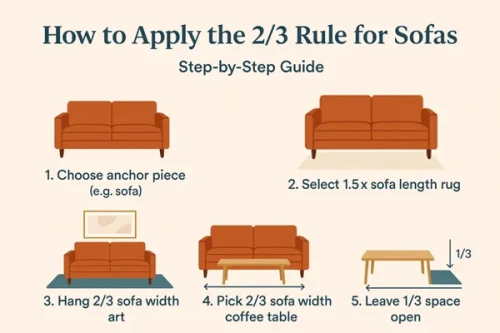
Applying the 2/3 rule is one of the easiest ways to make your living room look balanced and professionally styled.
It works for walls, rugs, and furniture groupings — all by following a simple visual ratio.
Step-by-Step Guide
- Start with your largest anchor piece — usually your sofa or sectional.
- Choose a rug about 1.5× the sofa’s length, so the sofa takes up roughly two-thirds of it.
- Hang wall art that’s about two-thirds the sofa’s width, centered above it.
- Pick a coffee table about two-thirds the sofa’s width for a cohesive, grounded look.
- Leave one-third of the area open for walkways, natural light, and visual breathing room.
Pro Tip: Always step back after arranging — if the space feels balanced and comfortable, you’ve likely nailed the 2/3 ratio.
Quick Ratio Table
This easy proportion system ensures every element feels intentional and connected — the secret behind a living room that looks balanced, stylish, and designer-approved.
Applying the Rule Beyond Sofas

The 2/3 rule isn’t just for sofas — it’s a versatile design principle that works across your entire living space.
By applying the same proportion to rugs, art, color, and texture, you can create a room that feels naturally cohesive from floor to ceiling.
Rugs and Flooring
Keep your sofa covering about two-thirds of the rug’s surface.
This anchors the seating area while allowing the rug to extend beyond the sofa’s edges, creating a sense of spaciousness and flow.
Wall Art and Décor
When hanging artwork or mirrors, aim for pieces about two-thirds the width of the furniture below.
This keeps the visual weight centered and prevents the wall from feeling top-heavy or bare.
Color Ratios
Use the 2/3 principle in your color palette:
- ⅔ dominant color for walls or main furniture
- ⅓ accent tones through cushions, throws, or art
This balance maintains harmony without overwhelming the space.
Texture and Materials
For depth and warmth, mix ⅔ smooth or neutral materials (like wood, linen, or matte finishes) with ⅓ textured or bold surfaces (like velvet, rattan, or metallics).
The contrast keeps the design dynamic yet cohesive.
When used across multiple layers — from layout to finishes — the 2/3 rule becomes more than a measurement; it’s a design rhythm that unifies your entire room.
Why Does the 2/3 Rule Work in Interior Design?

The 2/3 rule isn’t just about numbers — it’s about how the human brain perceives balance.
Our eyes naturally seek harmony between visual weight and empty space.
When two-thirds of a layout is filled and one-third is left open, it creates a sense of order that feels calm and pleasing.
This proportion appears everywhere in nature — in spiral shells, leaves, waves, and even human faces.
The brain recognizes these patterns as familiar and balanced, which is why interiors following similar ratios feel instantly comfortable.
Perfect symmetry can look rigid or artificial, while complete randomness feels chaotic.
The 2/3 ratio strikes the ideal middle ground — asymmetry with harmony.
It keeps the eye moving naturally across a space, helping us process visual information without strain.
In short, the 2/3 rule works because it mirrors how we experience beauty in the world around us — organized yet organic, balanced yet alive.
Common Mistakes to Avoid

Even a simple design principle like the 2/3 rule can lose its effectiveness if it’s misapplied.
Below are some of the most frequent mistakes people make—and how to avoid them.
1. Oversizing the Sofa
A sofa that spans more than three-quarters of the wall or rug can overwhelm the room.
Always leave some open space on each side to maintain balance and movement.
2. Choosing a Rug That’s Too Small
A rug smaller than the sofa makes furniture appear disconnected.
Ideally, the rug should extend under about two-thirds of the sofa to ground the seating area visually.
3. Hanging Wall Art the Same Width as the Sofa
When artwork matches the sofa’s full width, it feels heavy and crowded.
Aim for art that’s about two-thirds the sofa’s width for a more harmonious look.
4. Following the Rule Too Literally
The 2/3 rule is a design guide, not a strict measurement.
Adjust proportions slightly based on your space, furniture scale, and personal style.
Balance should always feel natural, not forced.
When and How to Break the Rule

Like any design guideline, the 2/3 rule is meant to guide your eye, not limit your creativity. Knowing when to break it intentionally can make a space feel more personal and dynamic.
1. In Small Apartments
Compact rooms often require furniture that fits the available space rather than strict proportions.
A smaller sofa or tighter layout may look better if it keeps the room open and comfortable.
2. In Minimalist Spaces
Minimalist or contemporary interiors sometimes benefit from symmetry and clean lines.
A sofa that aligns evenly with a wall or rug can enhance a calm, ordered look.
3. In Large or Open-Plan Rooms
Expansive spaces may need larger furniture to maintain visual weight.
Oversized sectionals or extended seating can create a sense of proportion even if they exceed the 2/3 ratio.
4. When It Serves the Design
The best designers treat the 2/3 rule as a tool, not a rulebook.
Break it purposefully to highlight a statement piece, define a focal point, or introduce contrast.
What matters most is that the space feels balanced, intentional, and true to your style.
Final Thoughts

The 2/3 rule is a timeless design principle that brings balance, proportion, and harmony to any living room.
When applied thoughtfully, it helps every element—sofa, rug, and art—work together to create a space that feels both stylish and comfortable.
For a perfectly balanced living room, explore our SUNSGOODS sofa collection.
Designed with expert proportions and premium craftsmanship, our pieces make applying the 2/3 rule effortless—helping you achieve designer-level harmony in every corner of your home.


 English
 Spanish
 Portuguese
 Russian
 Arabic
 Japanese
 Korean
 German
 French
