

If your mattress feels too firm, it can leave you waking up sore, uncomfortable, or struggling to sleep through the night.
This is a common problem, and it doesn’t always mean you need to replace your mattress.
In many cases, you can make a mattress softer and more comfortable with a few simple adjustments.

Small changes to your sleep setup, room temperature, or mattress support can improve comfort without much effort or expense.
This guide walks you through step-by-step ways to make a mattress softer, starting with the easiest fixes and ending with options to consider only if nothing else works.
Whether your mattress is brand new or well-used, these tips can help you sleep better.
How to Tell If Your Mattress Is Too Firm

Here are some clear signs that your mattress may be firmer than your body needs:
- Pressure buildup in areas like your shoulders, hips, or lower back
If these spots feel sore or tender when you wake up, your mattress may not be providing enough cushioning. - Morning stiffness or aches
Waking up stiff, even after a full night’s sleep, often points to a surface that’s too hard. - Trouble getting comfortable at night
Tossing and turning, shifting positions often, or struggling to settle in can mean your mattress isn’t adapting to your body. - Frequent nighttime wake-ups
If you wake up repeatedly without a clear reason, your mattress could be disrupting your sleep without you realizing it. - Better sleep on softer beds elsewhere
Sleeping more comfortably in hotels or on other beds is a strong sign your mattress at home may be too firm. - Your body type or sleep position isn’t well supported
Firmness feels different depending on body weight, sleep position, and comfort preference. What works for someone else may not work for you.
If several of these points sound familiar, your mattress firmness may be affecting both your sleep quality and how your body feels during the day.
Step 1: Let Your Mattress Break In Naturally

If your mattress is new, there’s a good chance it just needs time.
Many mattresses feel firmer at first, even if they’re designed to soften up with regular use.
When a mattress is brand new, the materials inside haven’t fully settled yet.
Foams, fibers, and support layers need pressure and movement to loosen slightly and adapt to your body.
Sleeping on the mattress helps spread weight more evenly and allows the surface to relax over time.
Typical break-in timelines
- Most mattresses need 30 to 60 nights to break in
- Foam and hybrid mattresses often take longer than innerspring models
- The mattress may feel gradually softer rather than changing overnight
During this period, it’s best to sleep on the mattress consistently instead of switching back and forth between beds.
This gives your body and the mattress a fair chance to adjust to each other.
Who this works best for
- People with a brand-new mattress
- Those who feel mild discomfort but not sharp pain
- Sleepers who liked the mattress in-store but find it firmer at home
If your mattress is new and only feels slightly too firm, waiting it out is often the simplest fix.
If discomfort continues after the break-in period, it’s time to move on to the next step.
Step 2: Adjust Temperature to Soften the Surface

Temperature can have a bigger impact on mattress feel than many people realize, especially if you sleep on memory foam or a foam-based mattress.
How heat affects memory foam
Memory foam reacts to warmth. When it’s cold, the foam stays stiff and slow to respond.
As it warms up, it becomes more flexible and contours more easily to your body.
This is why a mattress can feel extra firm when you first lie down, then slowly soften as the night goes on.
Simple ways to warm the sleep surface
- Raise the bedroom temperature slightly before bed
- Use warmer bedding during colder months
- Get into bed a few minutes earlier to let body heat soften the foam
These small changes can help the mattress feel less rigid and more comfortable, especially during winter or in cooler climates.
When this helps and when it won’t
This step works best if your mattress feels firm mainly at the start of the night or during colder weather.
It’s most effective for memory foam and hybrid mattresses with foam comfort layers.
However, if your mattress feels hard all night long or causes pressure pain no matter the temperature, heat alone won’t be enough.
In that case, it’s better to move on to the next steps that directly change the surface feel.
Step 3: Add a Mattress Topper for Instant Softness

If you want the fastest and most noticeable change, a mattress topper is often the best solution.
It adds a soft layer on top of your mattress, reducing pressure without changing the support underneath.
Why toppers work so well
A topper creates extra cushioning where your body needs it most.
Instead of fighting against a firm surface, your shoulders, hips, and back can sink in just enough to feel comfortable.
This makes toppers especially helpful if your mattress feels hard but still supportive.
How thickness changes the feel
- A 1–2 inch topper adds light cushioning and slightly softens the surface
- A 2–3 inch topper creates a more noticeable plush feel and better pressure relief
- Thicker toppers feel softer but can change how deeply you sink
Choosing the right thickness depends on how firm your mattress feels and how much softness you want to add.
Which sleepers benefit most
- Side sleepers who feel pressure in shoulders or hips
- Lightweight sleepers who don’t sink enough into firm mattresses
- Anyone with a mattress that feels too hard but otherwise supportive
Foam vs plush toppers
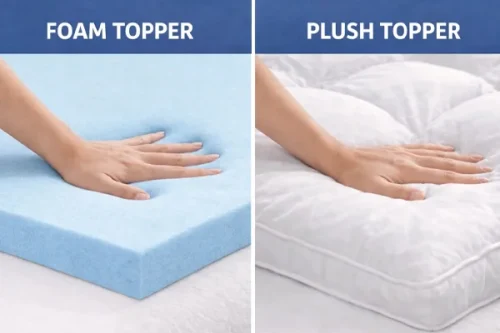
- Foam toppers contour to the body and offer better pressure relief
- Plush or fiber-filled toppers feel softer on the surface but provide less contouring
Foam works better for pressure points, while plush toppers suit those who want a softer feel without much sink.
How to avoid losing support
To keep proper alignment, place the topper on a mattress that still has a solid support core.
If the topper is too thick or too soft, it can cause your body to sink unevenly.
The goal is added comfort, not a sagging surface.
For many people, a well-chosen topper is all it takes to make a firm mattress feel comfortable again.
Step 4: Check Your Bed Base and Support System

If your mattress feels harder than expected, the issue may not be the mattress itself.
The bed base underneath plays a big role in how firm your mattress feels.
How different bases affect firmness
- Solid platforms create a very firm feel because there’s no flexibility underneath the mattress
- Slatted bases can add some give, especially if the slats are slightly flexible or spaced correctly
- Box springs often add a bit of softness, depending on their condition and design
A mattress placed on a rigid surface will almost always feel firmer than the same mattress on a base with some movement.
Signs your bed base is making things worse
- The mattress feels noticeably softer when placed on the floor
- You feel pressure points even with a topper
- Slats are too far apart, broken, or uneven
- The base creaks, sags, or feels unstable
These issues can prevent the mattress from responding properly to your body.
Easy adjustments vs replacements
- Tighten loose slats or replace damaged ones
- Add a bunkie board or thin layer of padding over slats to improve weight distribution
- Check manufacturer guidelines to make sure your base is compatible
Replacing the entire base is usually unnecessary unless it’s damaged or incompatible.
Often, small fixes are enough to make your mattress feel more comfortable without changing the mattress itself.
Before moving on to bigger changes, it’s worth making sure your mattress is getting the right support.
Step 5: Rotate or Flip the Mattress (If Possible)

Over time, mattresses can develop firm spots simply because the same areas support your body night after night.
Rotating or flipping the mattress can help even things out and slightly soften how it feels.
When flipping helps and when it doesn’t
Flipping only works if your mattress is designed to be flipped.
Many modern mattresses have a support layer on the bottom and a comfort layer on top, so flipping them would actually make them less comfortable.
If your mattress is labeled one-sided, stick to rotating instead.
Flipping or rotating helps most when:
- The mattress feels firm in specific areas
- You’ve slept on it for several months or longer
- The surface feels uneven rather than uniformly hard
It won’t help much if the mattress has always felt too firm or if the materials themselves are very stiff.
Rotation schedules
- Rotate your mattress every 3 to 6 months
- Turn it head-to-foot, not side-to-side
- Mark your calendar to keep it consistent
Regular rotation helps distribute wear more evenly and can prevent pressure points from forming.
What this actually changes in firmness
Rotating or flipping doesn’t transform a firm mattress into a soft one.
What it does is reduce uneven pressure, allowing less-used areas to feel slightly more forgiving.
This can make the mattress feel more comfortable overall, especially when combined with other steps like a topper or base adjustment.
It’s a simple step, but it can make a noticeable difference over time.
Step 6: Improve Comfort With the Right Bedding

Bedding doesn’t just affect how your bed looks.
The right pillows and sheets can change how firm your mattress feels and how your body responds to it.
How pillows affect pressure and alignment
A pillow that’s too thin or too firm can throw off your neck and spine, making a firm mattress feel even harder.
The goal is to keep your head and neck aligned with the rest of your body.
- Side sleepers usually need a thicker, more supportive pillow
- Back sleepers often feel best with a medium-height pillow
- Stomach sleepers typically need something thinner and softer
When your upper body is properly supported, there’s less strain on pressure points, and the mattress feels more comfortable overall.
Why sheets and materials change perceived softness
Sheet materials affect both texture and temperature.
Rough or stiff fabrics can make a firm mattress feel harsher, while softer, more breathable materials help the surface feel gentler.
- Smooth cotton or bamboo sheets reduce friction against the skin
- Breathable fabrics help regulate heat, which can soften foam layers
- Thicker weaves often feel plusher than crisp, lightweight ones
Simple swaps that help without major cost
- Replace worn-out pillows that no longer support your sleep position
- Choose softer, breathable sheets instead of stiff or synthetic ones
- Add a lightweight mattress pad for extra cushioning without changing support
These small changes won’t replace a topper or fix a severely firm mattress, but they can noticeably improve comfort, especially when combined with the earlier steps.
Step 7: Adjust Your Sleep Position and Setup
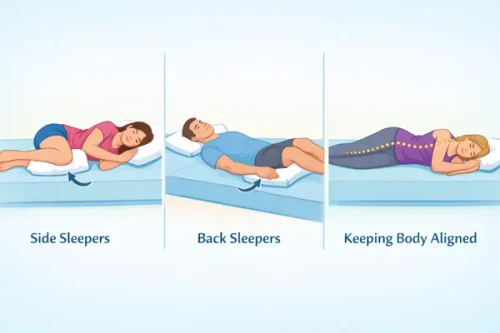
Sometimes a mattress feels too firm not because it’s wrong for you, but because how you’re sleeping is creating extra pressure.
Small changes to your sleep position and setup can make a noticeable difference.
How sleep position changes firmness perception
Firmness feels different depending on where your body puts the most weight.
- Side sleepers often feel firm mattresses more in the shoulders and hips
- Back sleepers may notice pressure in the lower back if there’s not enough contouring
- Stomach sleepers can feel discomfort if the mattress pushes the hips upward
The same mattress can feel supportive in one position and uncomfortable in another.
Small posture changes that reduce pressure
- For side sleepers, placing a pillow between the knees can reduce hip and lower back strain
- For back sleepers, a thin pillow under the knees can help the spine relax
- Keeping your body aligned instead of twisting during sleep helps reduce pressure points
These adjustments help your body settle more evenly into the mattress, making it feel less rigid.
When this is enough on its own
Changing sleep position works best when discomfort is mild or occasional.
If you only feel pressure in certain positions or at certain times of night, this step may solve the problem without any other changes.
If the mattress still feels uncomfortable no matter how you sleep, it’s time to move on to solutions that directly change the mattress surface.
Step 8: Consider Mattress Replacement as a Last Resort

If you’ve tried multiple fixes and your mattress still feels uncomfortable, it may be time to accept that the mattress itself is the issue.
While replacement shouldn’t be the first solution, there are situations where no adjustment will truly help.
When no fix will realistically help
- The mattress feels uncomfortably firm no matter what you add or change
- Pressure pain continues even with a topper and proper support
- Sleep quality hasn’t improved after weeks of adjustments
At this point, the materials or construction may simply not suit your body.
Signs the mattress itself is the problem
- The mattress has always felt too hard, even after breaking it in
- You sleep better on most other beds
- The comfort layers feel thin or non-responsive
- The mattress is old, worn out, or no longer recovers its shape
A mattress should cushion your body while still supporting your spine. If it can’t do both, it’s likely the wrong fit.
How to avoid repeating the same mistake
- Choose firmness based on your sleep position and body weight, not just labels
- Test mattresses long enough to understand how they feel overnight
- Pay attention to pressure relief, not just initial support
Replacing a mattress can be frustrating, but when it’s truly the problem, the right replacement can make a bigger difference than any temporary fix.


 English
 Spanish
 Portuguese
 Russian
 Arabic
 Japanese
 Korean
 German
 French
