

You walk in thinking a mattress run is a quick errand, but then reality hits. You get buried under jargon like “Euro top” and “hybrid” until your eyes glaze over.
The real head-scratcher is the “tight top.”
It is not exactly an inviting name. It sounds restrictive. Like sleeping on a plank. Most folks assume it is just code for “old-fashioned” or uncomfortable. That is a bit unfair, though. We are going to cut through the marketing fluff to see if this design is what your spine actually wants or if you should keep walking.
What Is a Tight Top Mattress?
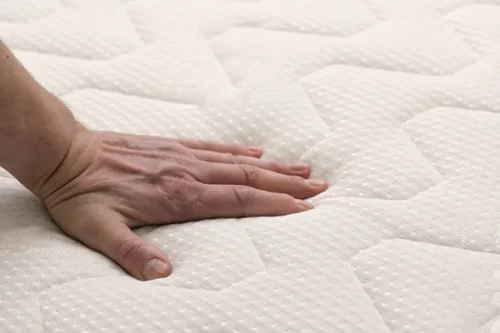
Think of a tight top as the button-down shirt of the mattress world. It is neat, tailored, and completely lacks that puffy, muffin-top layer you see sewn onto pillow top or Euro top models.
The name basically explains the construction. The fabric is pulled taut across the sleeping surface, creating a finish that is flat and smooth. All the comfort foam and padding are baked right into the mattress body, sitting much closer to the heavy-duty springs underneath.
Because of that, you don’t really sink in so much as you sleep on it. It tends to feel firmer and faster to respond when you move. While the cover might be soft cotton or wool, the overall vibe is traditional. It is a supportive, no-frills option for people who hate that quicksand feeling you get with plush beds.
How a Tight Top Mattress Feels to Sleep On
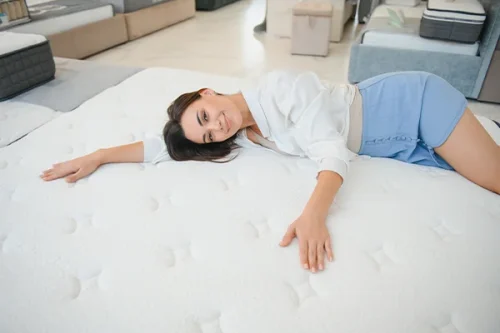
If you are used to sinking into a bed like it is a giant marshmallow, lying on a tight top is going to be a shock. It is a night-and-day difference.
The surface feels flat. Unrelenting, almost. Instead of that slow, melting drift downwards, you stay parked right on top of the mattress. Most people call it firm, maybe medium-firm, but I think “immediate” is the best way to describe the support.
Here is the thing. Because the soft layers are compressed tight against the springs, the bed has energy. It is bouncy. If you wrestle with your covers at 2 AM, this responsiveness is a godsend since the mattress actually helps you roll over rather than trapping you.
You sacrifice the contouring, though. It is structural, not “cloud-like.” It is more like sleeping on a really well-upholstered bench.
Who Is a Tight Top Mattress Best For?

Look, I am not going to sugarcoat it. A tight top is definitely not for everyone. But for the right person? It is practically a miracle.
- Back and Stomach Sleepers If your bed is too soft, your hips sink, and your spine ends up curved like a banana. Not good. A tight top keeps you honest. It provides that flat resistance necessary to keep your midsection from dipping, which is the main culprit for that nagging lower back pain.
- Heavier Sleepers Soft foam has a nasty habit of quitting on you. If you are plus-sized, plush layers can compress way too easily, leaving you lying practically on the springs. A tight top gives you a solid, reliable deck that holds up under weight without that “sinkhole” effect.
- The Traditionalist (and the Wallet Watcher) Maybe you just hate that quicksand feeling of memory foam. If you want that old-school, bouncy feel where you sleep on the mattress rather than inside it, this is the familiar comfort you are chasing. Plus, skipping the fancy sewn-on toppers usually makes this the most affordable option in the store.
Who Should Avoid a Tight Top Mattress?

Here is the flip side. For a lot of people, buying a tight top is a mistake they realize by night two.
- Side Sleepers: Hard pass. Your body has curves, but this mattress does not. You need cushion under your shoulder and hip. On a tight top, those pressure points just hit a wall. Hello, morning soreness.
- Petite Frames: If you are lighter, you might not weigh enough to actually compress the springs. It ends up feeling unforgiving. Sort of like sleeping on a carpeted floor.
- Couples: Since these beds rely on coils, motion travels. If your partner tosses at 3 AM, you are going to feel the bounce. It is a bit like a trampoline.
- The “Cloud” Chasers: If you want a bed that hugs you back, keep walking. This is structural support, not cozy luxury.
At the end of the day, the “best” bed is just the one that doesn’t make you ache.
Tight Top vs Pillow Top vs Euro Top Mattresses
The main difference between tight top, pillow top, and Euro top mattresses comes down to how the comfort layers are constructed and how the mattress feels to sleep on.
If you are just looking for the cheat sheet, here is the quick breakdown:
- Tight Top: The pragmatic pick. If you are watching your wallet or just prefer a bed that feels solid rather than squishy, this is your guy. It is durable, no-nonsense, and usually the cheapest option on the floor.
- Pillow Top: Think of this as the happy medium. You get that initial “ahhh” softness when you lie down, but you aren’t paying top-tier prices for it. It is soft, accessible luxury.
- Euro Top: This is the splurge. If you want that flush, tailored look and a dense, expensive feel—and you don’t mind the price tag reflecting that—this is the one you aim for.
Durability and Lifespan of Tight Top Mattresses

Here is a little industry secret. The more foam you stack on top, the faster a bed breaks down.
Tight tops are basically the workhorses of the mattress world because they strip away that failure point. Without a thick pillow layer to compress and turn into a crater, the surface stays flat for years. You can realistically expect about six or seven years of good sleep out of one.
Obviously, mileage varies. If you are heavier, you are going to put more stress on the coils and might wear it out sooner. And while the days of flipping a mattress are pretty much over, you still need to rotate it. Spin it 180 degrees every six months to keep it from getting lumpy.


 English
 Spanish
 Portuguese
 Russian
 Arabic
 Japanese
 Korean
 German
 French
