

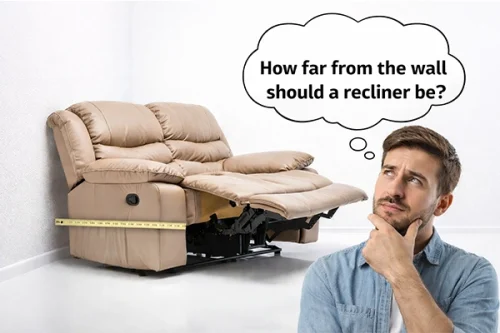
Recommended Distance by Recliner Type
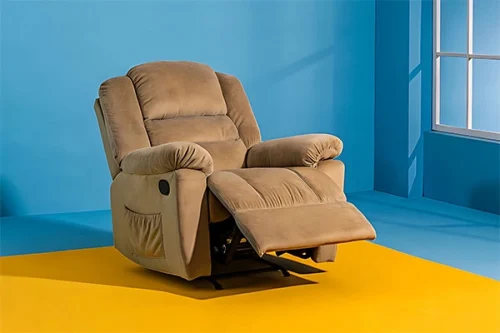
The distance a recliner needs from the wall depends largely on its design and reclining mechanism. Below are the most commonly recommended clearances by recliner type, based on top-ranking sources and Google AI Overview patterns.
This type-based approach ensures proper reclining function, prevents damage, and improves comfort regardless of room size or chair style.
Why Proper Wall Clearance Matters
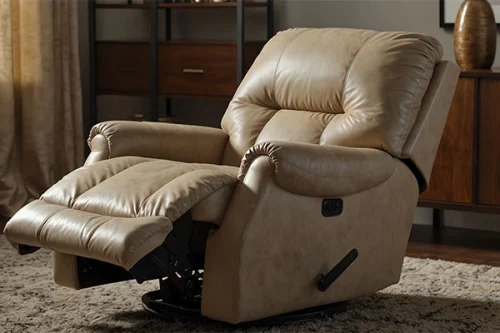
Ensuring the correct distance between your recliner and the wall is essential for both functionality and longevity. Here’s why:
- Prevents Wall and Upholstery Damage
Too little clearance can cause the recliner’s backrest to rub against the wall, damaging both the chair’s upholstery and the wall surface. Proper clearance protects both. - Allows Full Recline and Footrest Extension
Sufficient space ensures that the recliner can fully extend without obstruction, giving you the maximum comfort of a full recline and footrest. - Reduces Strain on Motors and Mechanisms
A recliner that is too close to the wall puts strain on its reclining and lifting mechanisms, potentially leading to premature wear and tear or malfunction. - Improves Comfort and Safety
A recliner placed too close to the wall can restrict movement, causing discomfort. Proper clearance allows for smooth operation, ensuring both comfort and safety while using the chair.
This simple but critical adjustment helps maintain the chair’s function and extends its lifespan.
Key Factors That Affect Required Distance
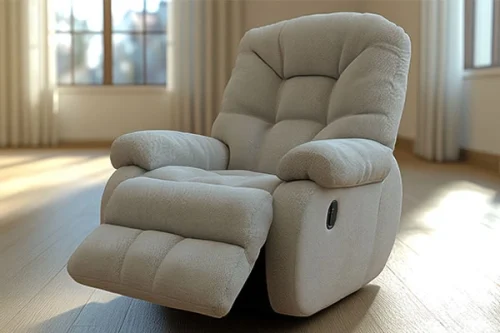
Several factors influence how far your recliner should be from the wall:
- Recliner Size: Larger recliners require more space for reclining, while smaller models like wall-huggers need less clearance.
- Reclining Mechanism: Wall-huggers move forward as they recline, requiring minimal clearance. Traditional recliners recline backward and need more space.
- Room Size and Layout: Larger rooms offer more flexibility for placement, while smaller rooms may need the chair to be closer to the wall.
- Baseboards: The thickness of baseboards reduces the clearance space behind the chair.
- Nearby Furniture: Ensure there’s enough room for the recliner to move freely and not obstruct other furniture or walkways.
- Power Outlet: Electric recliners need to be near a power source, affecting their placement from the wall.
These factors will help determine the ideal space for your recliner to function properly and comfortably.
How to Measure the Correct Distance

To measure the correct distance for your recliner, start by measuring the full depth of the chair when it is fully reclined to determine the necessary space behind it. Add a few extra inches for clearance to avoid any obstruction and protect both the recliner and the wall from damage. Don’t forget to account for the thickness of baseboards if present, as they reduce the available space. For a more accurate placement, use masking tape to outline the area on the floor where the recliner will sit. This will help you visualize the space it occupies and ensure it fits comfortably without restricting movement or functionality.
Final Recommendation

Always refer to the manufacturer’s specifications for the ideal placement of your recliner. When in doubt, it’s better to leave more space rather than less to ensure smooth reclining and avoid damage.
Lorem ipsum dolor sit amet, consectetur adipiscing elit. Ut elit tellus, luctus nec ullamcorper mattis, pulvinar dapibus leo.


 English
 Spanish
 Portuguese
 Russian
 Arabic
 Japanese
 Korean
 German
 French
