

The average couch weighs between 150 and 300 pounds—but if you’ve ever tried squeezing one through a doorway, you know it can feel way heavier.
The weight of a couch matters more than most people realize—it affects delivery costs, moving day stress, and even whether it’ll fit up your stairs.

Size, frame materials, and extras like recliners or pull-out beds can push the weight even higher.
Knowing these numbers ahead of time helps you plan smarter, avoid injuries, and keep your home safe when it’s time to move or rearrange furniture.
Factors That Affect Couch Weight
Not all couches are built the same, and their weight proves it.
A few key factors can make the difference between something you can handle with two people and something that needs a full moving crew.
1. Size and Dimensions

This one’s pretty straightforward—the bigger the couch, the more it’s going to weigh.
A standard three-seater usually falls in the 150–300 pound range, while a four-seater can tip the scale closer to 350 pounds.
Sectionals are in a league of their own since each added piece piles on extra pounds.
2. Frame Construction & Upholstery Materials

The frame is the backbone of any couch, and heavier doesn’t always mean better.
Hardwood frames (oak, maple, ash) are sturdy but add serious weight compared to metal or engineered wood.
Upholstery makes a difference too: leather and heavy woven fabrics are denser than cotton or microfiber.
While solid wood and thick fabric can mean durability, sometimes the extra pounds just make moving harder without adding comfort.
3. Cushion Filling & Support Systems

Ever noticed how some couches feel heavier even if they’re the same size?
That’s usually in the cushions and support.
High-density foam, feather-filled cushions, and coil springs weigh more than lighter foams or webbing-only designs.
Great for comfort, sure—but it’s extra weight to haul around.
4. Additional Features

Modern couches come with more than just a place to sit.
Recliners, sleeper beds, storage compartments, cup holders, even built-in USB ports all add mechanical parts and extra material.
Each upgrade adds convenience but also tacks on more pounds, sometimes turning a manageable couch into a two-person struggle.
5. Apartment & Movability Considerations
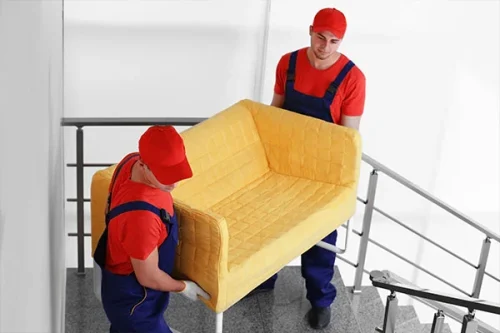
Even if the couch itself isn’t the heaviest, where you live makes a difference.
Tight staircases, small elevators, and narrow doors can make a 200-pound sofa feel like 500.
For upstairs apartments or older homes, it’s smart to think about weight distribution too—using rugs to spread out pressure and avoiding placing super-heavy pieces over unsupported joists.
Average Weights of Common Types of Couches
So how much does a couch actually weigh?
Here’s a quick breakdown of the most common types.
Keep in mind these are ballpark figures—materials, upholstery, and added features can bump the numbers up or down.
Weights of Other Living Room Furniture

Couches aren’t the only heavy hitters in your living room.
Other common pieces can add up fast when you’re planning a move or figuring out delivery. Here are a few examples:
- Loveseat: Usually 80–250 lbs, depending on the frame and upholstery. A simple fabric loveseat is on the lighter side, while a leather or reclining model is much heavier.
- Recliner: Expect about 100–200 lbs. Standard manual recliners stay closer to 100, but power recliners with motors can weigh quite a bit more.
- Futon: Ranges from 55–200 lbs. Lightweight frames with thin mattresses are easiest to handle, while wood frames with thicker mattresses feel closer to a full sofa.
These numbers aren’t exact, but they give you a good ballpark figure to help estimate moving costs or decide how much help you’ll need on moving day.
Movability, Delivery & Shipping Considerations

The number on the scale isn’t just trivia—it directly affects how your couch gets from the store to your living room.
Delivery Options
- Standard delivery usually works for couches under 200 lbs—think loveseats or small futons.
- Freight shipping (LTL) is common for mid-sized sofas in the 200–350 lb range. They’re bulky enough to need palletized shipping but not impossible to manage with a few strong hands.
- White-glove delivery is the go-to for sectionals, sleeper sofas, or anything over 350 lbs. This service covers the heavy lifting, setup, and sometimes even packaging removal. It costs more, but it saves you from a moving-day backache.
Shipping & Handling
Lightweight pieces like modular sofa sections (60–100 lbs each) may ship via UPS or FedEx Ground, while anything larger gets classified under freight.
If you’re buying online, check the fine print—shipping fees can jump once the couch crosses certain weight limits.
Apartment & Floor Concerns
Living in a walk-up or an older building adds extra challenges.
Narrow stairwells and small elevators can make even a medium-sized sofa tough to maneuver.
And if you’ve got wood floors or older joists, putting a 300+ lb couch in one spot can cause uneven wear.
A simple trick?
Use area rugs to spread out the load and protect your flooring.
How to Estimate and Move Couch Weight

Not sure how heavy your couch really is?
Here are some simple ways to get a ballpark figure—and a few tips to make moving it less of a headache.
1. Check Manufacturer Specs or Use Calculators
The fastest way is to look up the product details online or in your owner’s manual.
Most furniture retailers list dimensions and shipping weight.
If that’s not available, online furniture weight calculators can give you a decent estimate based on size and style.
2. Packing Best Practices
Protecting your couch is just as important as lifting it.
- Remove and wrap cushions separately.
- Cover the frame with moving blankets, microfoam, or paper pads.
- If you’re using shrinkwrap, never apply it directly on the fabric or leather—it can trap moisture or even stick to the surface. Always use padding as a barrier first.
3. Lifting & Moving Safely
- Plan your route before lifting—measure doorways, check stairwells, and clear obstacles.
- Use sliders under the legs to save your floors.
- When lifting, bend at the knees (not your back), keep the couch close to your body, and get a buddy to help with the other end.
- On stairs, move slowly and consider laying down blankets or boards as a makeshift ramp.
4. Loading Efficiently Into a Trailer
- Use a ramp if you have one; if not, one person should be inside the trailer to help lift.
- Stand the couch on its end to save space.
- Place heavier items toward the front of the trailer (near the cab) for better balance.
- Strap everything down with bungee cords or ratchet straps so it doesn’t shift in transit.


 English
 Spanish
 Portuguese
 Russian
 Arabic
 Japanese
 Korean
 German
 French
