

When deciding between a pine bed frame and an oak bed frame, the choice often comes down to comfort, durability, and budget.
Oak is prized for its strength and timeless character, while pine stands out for its lighter style and affordability.

In this guide, we’ll compare the two side by side — from durability and appearance to price and sustainability — so you can quickly see which option best fits your bedroom and lifestyle.
Durability & Strength

Oak is a hardwood with a dense grain, which makes it naturally resistant to dents, knocks, and heavy use.
With proper care, an oak bed frame can last 15 to 25 years or more, often looking better as it ages.
This makes it a dependable choice if you want a long-term investment.
Pine, by contrast, is a softwood.
It’s lighter and more prone to scratches, but still sturdy enough for everyday use.
A well-made pine frame usually lasts around 5 to 10 years, which is perfectly suitable for those who prefer a budget-friendly option or plan to update their bedroom style more often.
Both woods offer far greater durability than particleboard or cheap metal alternatives, giving you a solid foundation you can count on for years of comfortable sleep.
Appearance & Style Options

Oak has a warm, timeless look that many people associate with classic wooden furniture.
Its grain often shows elegant swirls and waves, giving it a rich, traditional character.
Over time, oak develops even more depth and charm, which is why it’s often chosen for master bedrooms or spaces where you want furniture to make a lasting impression.
Pine, on the other hand, has a much lighter tone and a straighter grain.
Its darker knots create a natural, rustic touch — something you’ll either love for its character or prefer to cover with paint.
Because pine accepts paint and stain so easily, it’s an excellent choice if you enjoy changing up your décor or want to add a Scandinavian-inspired finish.
Both woods are versatile enough to work with different interior styles.
Oak brings depth and elegance to traditional or rustic rooms, while pine blends beautifully into modern, minimalist, or children’s spaces.
In the end, your decision will often come down to whether you prefer the rich, classic look of oak or the bright, adaptable style of pine.
Price Comparison

Budget often plays a big role when choosing between pine and oak.
Pine bed frames usually fall in the $150–$300 range, making them a great choice if you want solid wood without stretching your wallet.
They deliver good durability for the price and are easy to replace if you decide to refresh your style in a few years.
Oak, on the other hand, is considered a premium option.
Most oak bed frames start around $500 and can easily climb past $1,000, depending on size and craftsmanship.
The higher price reflects oak’s density, durability, and the fact that it can last for decades with proper care.
While oak is more expensive upfront, both pine and oak are smarter long-term investments than cheaper materials like particleboard or low-quality metal frames, which tend to wear out quickly and need replacing.
Maintenance Needs

One of the nice things about pine is how low-effort it is to maintain.
A quick wipe with a soft cloth is usually enough to keep it clean, and because the wood takes paint and stain so well, touching up scratches or refreshing the finish is simple.
This makes pine practical for kids’ rooms or spaces where furniture tends to get more everyday wear.
Oak is also relatively low-maintenance, but in a different way.
Its dense grain naturally resists marks and damage, so it doesn’t need frequent care.
An occasional polish or light oiling will highlight its natural richness and keep it looking its best for decades.
With a little attention, an oak bed frame can remain a centerpiece in your bedroom for years without losing its beauty.
Sustainability & Eco Impact
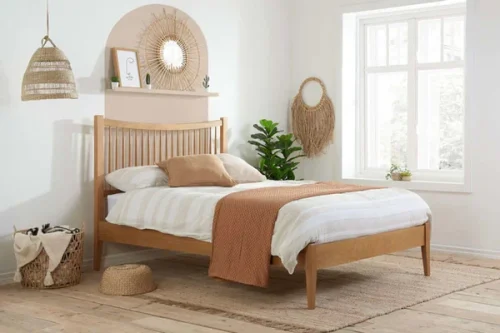
From an environmental perspective, both pine and oak have something to offer.
Pine grows much faster, reaching maturity in around 20 to 25 years.
This makes it a highly renewable choice and one that’s often more widely available.
Oak, by contrast, takes 50 to 100 years to mature, which means it isn’t replenished as quickly.
However, its long lifespan helps balance that slower growth cycle.
Because oak furniture can last for decades, you’re less likely to replace it, which reduces waste in the long run.
For eco-conscious buyers, the best option is to look for responsibly sourced or reclaimed wood.
Whether you choose pine or oak, selecting timber from certified sustainable sources ensures your bed frame not only looks good but also leaves a lighter footprint on the planet.
Weight & Assembly

Oak bed frames are heavy and solid, which adds to their stability but also makes them harder to move.
If you’re setting up an oak frame, you’ll probably need a second pair of hands for lifting and assembly.
Once in place, though, its sturdiness means it won’t shift or wobble easily — a real advantage for long-term use.
Pine, on the other hand, is much lighter, making it easier to handle during delivery, assembly, or when rearranging your room.
Its lighter weight can be a real benefit if you move frequently or like to refresh your bedroom layout without much hassle.
Best Uses by Room or Lifestyle
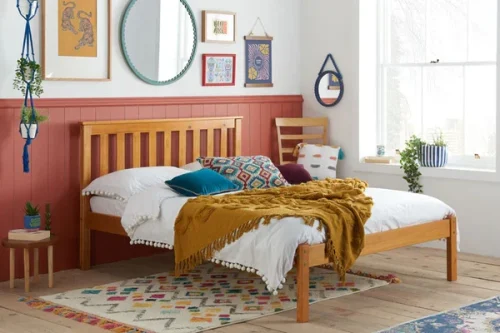
If you’re furnishing a master bedroom or want a bed frame that will handle heavy, daily use for many years, oak is the clear winner.
Its weight, strength, and durability make it perfect for a long-term, “buy it once” investment that you won’t have to think about replacing anytime soon.
Pine, by contrast, shines in situations where flexibility matters.
Its lighter weight and lower cost make it ideal for guest rooms, kids’ bedrooms, or rental homes where you might want to repaint or switch styles more often.
Because it’s easy to move and customize, pine suits people who like to refresh their décor or relocate without the hassle of heavy furniture.
In short, oak works best when you’re seeking permanence and tradition, while pine is the better fit for adaptable, budget-conscious living.


 English
 Spanish
 Portuguese
 Russian
 Arabic
 Japanese
 Korean
 German
 French
