


Quick verdict for shoppers
Who this works for

- Media rooms built for rest. I’ve placed recliner sofas where the TV stayed on longer than planned.
- Evenings focused on recovery. After long workdays, I tested these sofas myself. Feet up. Back supported. Arms fixed.
- Watching, gaming, or physical recovery as nightly routines. In those cases, the sofa earns its floor space.
- Homes managing joint pain or circulation issues. Fixed recline angles reduced pressure behind the knees for some users.
- Buyers who test fit in person. Bodies responded differently. When comfort ranks above layout flexibility, a recliner sofa fits.
Who should skip it
- Small living rooms. I’ve removed recliner sofas from tight spaces more than once. Once reclined, walk paths disappeared.
- Homes with fixed clearances. Coffee tables shifted. Doors scraped. Daily movement turned awkward.
- People who rearrange furniture often. Weight and internal mechanics slow every change. I felt it every time we tried to reposition one.
- Style-first interiors. Visual weight took over the room. Clean layouts lost balance.
- Spaces needing flexibility. When layout freedom matters more than lounging, this sofa works against you.
What makes recliner sofas different, a 1-minute primer
Manual vs power reclining

- Manual recliners use levers and body weight. I’ve repaired many. Fewer internal parts. Lower upfront cost. Most failures came from bent linkages or worn release handles.
- Power recliners rely on motors, switches, and wiring. I’ve tested them in showrooms and homes. Motion feels smoother. Adjustments feel precise. Price climbs fast. Repairs took longer. Failures often traced to motors, control boxes, or loose wiring under the seat.
- Maintenance is not the same. Manual systems need basic tightening and alignment checks. Power systems need clean power access and protection from dust and spills. When electronics fail, the sofa often stays stuck until serviced.
Operational footprint, where buyers misjudge size

- Closed size misleads. I’ve measured sofas that looked compact in photos. At rest, they fit.
- Reclined clearance changes the room. The back moves backward. The footrest pushes forward. I’ve seen walkways shrink by 12 to 20 inches depending on model.
- Wall distance matters. Many buyers placed the sofa too close. First recline caused scraping or blocked motion. I’ve pulled sofas forward after delivery, cutting usable floor space.
- Daily use exposes mistakes. You notice it when standing, walking past, or opening doors. Measuring reclined depth upfront avoids rearranging later.
The biggest disadvantages
#1. Space and layout limitations

Rooms often stop working once the recline comes into play. At rest, the sofa fits. Once opened, walk paths disappear. In busy living rooms, people clip footrests or wait for space to pass. Seats face forward by design, which locks the layout. Floating furniture stops making sense. Conversation zones collapse into a single direction. If your room depends on flow, this issue surfaces fast.
#2. Bulk, weight, and moving headaches
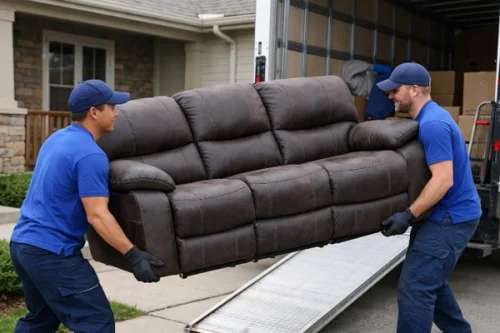
These sofas resist movement. Frames feel dense. Mechanisms add weight quickly. Small shifts turn into full lifts. During delivery, stairs slow crews. Door frames scrape. Elevators rule out certain models. After placement, owners hesitate to adjust anything again. The sofa sets the room, not the other way around.
#3. Reduced seating per inch
On floor plans, the math shows up early. Reclining seats take width. Armrests stay thick. Each seat behaves like its own chair. Capacity drops without warning. A three-seat recliner often replaces a four-seat standard sofa. In homes with guests or kids, this loss becomes obvious.
#4. Style constraints and dated look risk

Design reviews expose the problem. Visual weight pulls focus. Seams interrupt clean lines. Cupholders and thick backs break profiles. Finish options stay limited compared to fixed sofas. In style-driven rooms, attention shifts to the sofa for the wrong reasons. The space feels heavier before anyone sits.
#5. Higher purchase price and lifetime cost
Side-by-side pricing tells the story. Recliner versions cost more upfront. Motors, steel parts, and controls add up. Over time, repair costs stack. Service calls. Replacement parts. Labor. Once warranties expire, owners delay fixes. Some stop using the recline function altogether.
#6. Maintenance, cleaning, and crumb traps

Daily upkeep takes longer. Food drops through gaps. Pet hair gathers around tracks. Dust settles near joints. Vacuuming reaches more corners. Some mechanisms need periodic lubrication. Skip it, and movement stiffens. Maintenance stays manageable, but it never disappears.
#7. More failure points

Open a broken unit and the pattern repeats. Moving parts wear. Pins loosen. Motors fail. Switches stop responding. Manual recliners broke less often, though parts were harder to source. Power versions moved smoother, yet repairs dragged on longer. Each added feature introduced another failure point.
#8. Comfort is not universal
Not every body fits the design. Some users struggle to stand. Seat heights run low. Recline angles lock people into positions they dislike. Taller bodies feel compressed. Shorter users lose foot contact. Comfort depends on proportions, not brand names.
#9. Social and hosting downsides
Once seats recline, gatherings change. Eye levels split. Postures lean back. Conversation slows. Attention pulls forward. Hosting turns passive. In rooms meant for talking, the mood shifts quickly.
Hidden downsides most articles miss
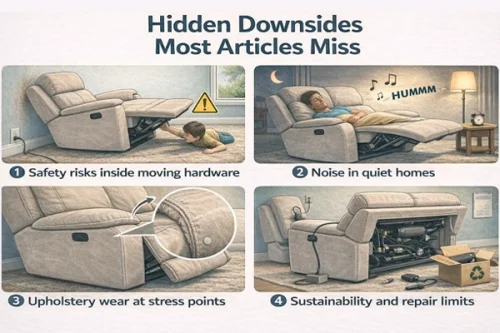
#1. Safety risks inside moving hardware
Recliner sofas hide pinch zones. Hinges close fast. Gaps appear and disappear during motion. I’ve seen fingers pulled back late and pet tails caught under footrests. Kids and pets stay low to the floor, right where mechanisms move. Clearance errors add damage. Push the sofa too close to a wall and the back hits during recline. Paint scuffs follow. Drywall dents show up within weeks in tight rooms.
#2. Noise in quiet homes
Showrooms hide sound. Homes expose it. Once the room goes quiet, clicks and motor noise stand out. Older mechanisms produced sharp metal sounds. Lower-quality motors hummed longer than expected. I noticed this most at night. The sofa worked fine. The noise still broke the calm. For light sleepers or shared walls, this mattered more than comfort.
#3. Upholstery wear at stress points
Motion leaves marks. Fabric creases where seats bend. Leather stretches near hinges. Stitching around footrests stays under constant tension. Early stress shows as puckering, shine changes, or loose threads near moving joints. These signs appear before the rest of the sofa looks worn. Once visible, repairs stay obvious.
#4. Sustainability and repair limits
Recliner sofas age faster than fixed sofas. Fixed frames allow reupholstery or basic repair. Recliners depend on specific parts. Motors. Control boxes. Metal linkages. When parts go out of production, repair stops making sense. I’ve advised buyers to look for removable motors, standard connectors, and accessible mechanisms. Without those, the sofa reaches end of life earlier than expected.
How to reduce the downsides
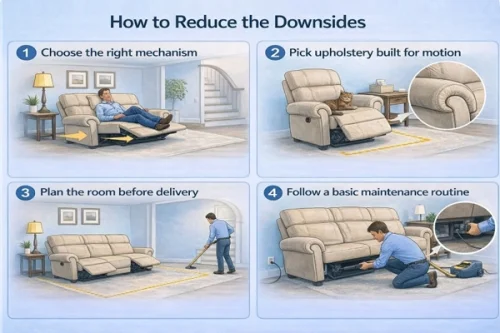
- Choose the right mechanism
Focus on how the sofa moves. Wall-hugger designs slide the seat forward before reclining. I’ve measured savings of 6 to 10 inches behind the sofa compared to standard systems. In small rooms, that space keeps walk paths usable. Manual recliners suit buyers who want fewer parts and fewer failures. Power recliners suit users who need easier operation or finer position control. When looking at power models, check under the seat. Steel linkages, clean wiring, motors lifted off the floor last longer. Thin metal and loose cables show up early in lower-end builds. - Pick upholstery built for motion
Recliners stress the same areas every day. Fabric bends at hinges and footrests. In my testing, tight weaves and top-grain leather held up best in these zones. Loose weaves fuzz early. Low-grade faux leather peels where heat and friction meet. Removable seat cushions simplify cleaning. Darker colors hide wear better. If you have pets, smoother surfaces release hair faster. - Plan the room before delivery
Do not measure only the closed sofa. I tape out the full reclined depth on the floor before delivery. This shows where feet extend and backs travel. Keep clear paths beside and behind the sofa. Check door swings and nearby cabinets. For power recliners, plan outlet access early. Cords across walkways lead to damage and trips. In tight rooms, pulling the sofa forward often works better than pushing it against the wall. - Follow a basic maintenance routine
Once a month, vacuum under seats and along tracks. Hair and crumbs slow movement over time. Every few months, check bolts and joints for looseness. I’ve caught early wobble this way before real damage set in. For power units, inspect cords and keep liquids away from switches. When movement sounds different, act early. Small fixes cost less than delayed repairs.


 English
 Spanish
 Portuguese
 Russian
 Arabic
 Japanese
 Korean
 German
 French
