

If you’re asking what type of bed frame lasts the longest, the quick answer is that metal and solid hardwood frames usually come out on top.

Both are tough, dependable, and built to handle years of use without giving you trouble.
But here’s the thing — not every frame is created equal, and how long yours holds up depends on more than just the material.
Nobody wants a bed that squeaks, shifts, or falls apart after a few years.
A good frame is about more than style; it’s about comfort, support, and getting real value for your money.
In this guide, we’ll break down the most common frame types, compare how long each one lasts, and share simple tips to help yours go the distance.
Key Factors That Affect Bed Frame Durability

When it comes to figuring out how long a bed frame will last, it’s not just about the style you pick at the store.
A few core factors make the difference between a frame that holds steady for decades and one that gives out after a couple of years.
Material Quality

The type of material is the first big clue to durability.
Metal frames (especially steel or iron) resist warping and can handle a lot of weight.
Hardwood frames like oak or maple can easily last decades with care, while softwoods (pine, for example) dent more easily.
Upholstered frames depend on what’s underneath the fabric—quality wood or metal cores last longer.
And don’t forget storage or ottoman frames—their hinges and drawers are only as strong as the material used.
Construction Methods

How a frame is put together matters just as much as what it’s made from.
For wood, mortise and tenon joints or dovetails are way stronger than glue or staples.
In metal frames, welded joints generally outlast bolted ones, since bolts can loosen over time.
With storage beds, look for sturdy tracks and solid hinges instead of lightweight fittings.
Maintenance & Care
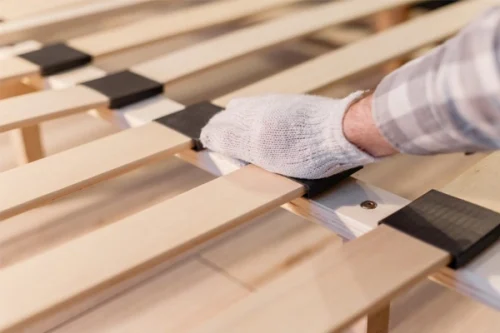
Even the toughest frame won’t survive long if it’s ignored.
Metal frames need occasional checks for rust and loose bolts.
Wood should be dusted and polished to protect against scratches and moisture.
Upholstery benefits from vacuuming and fabric protectors, while storage frames last longer if you don’t overload the drawers or strain the lift-up mechanism.
Environmental Conditions

Where you live also plays a role.
High humidity can swell or warp wood and encourage rust on metal.
Extreme temperature swings may cause wood to crack.
And yes, pests like termites can be a real issue in some areas.
Keeping your bedroom environment stable and dry goes a long way toward helping any frame last longer.
Comparing Bed Frame Types by Longevity
Not all bed frames are built the same.
Some are designed to handle daily wear for decades, while others look great but need more upkeep.
Here’s how the most common types stack up in terms of durability and lifespan.
Metal Bed Frames

Metal frames—especially those made from steel or iron—are tough and stable.
With welded joints and a protective finish, you can expect them to last 10–15 years or more.
They’re resistant to pests and warping, though cheap versions can bend or squeak if the construction isn’t solid.
Wooden Bed Frames

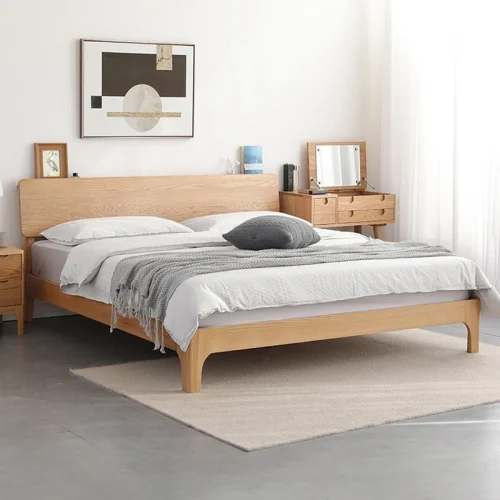
Hardwood frames (oak, maple, walnut) are the heavy hitters here, often lasting 20–30 years if cared for properly.
Softer woods like pine look good but don’t hold up quite as long.
Regular polishing and sealing go a long way in keeping wood frames sturdy and stylish for the long haul.
Upholstered Bed Frames

These add comfort and style, but their lifespan depends on the fabric and internal structure.
A frame with a solid wood or metal core may last 10–15 years, but the fabric or leather covering will likely show wear sooner.
Regular cleaning and fabric protectors are key.
Storage Bed Frames

Whether it’s drawers underneath or a lift-up style, storage beds are all about convenience.
The frame itself can last a good while, but the drawers, hinges, and lift mechanisms are the weak points.
Expect medium to high durability—usually around 10–15 years with careful use.
Divan Bed Frames

Popular in the UK but available in the U.S. too, divan bases are known for being sturdy platforms with built-in storage.
A well-made divan can last 15+ years, though the drawers may need occasional tightening or repairs.
Ottoman Bed Frames
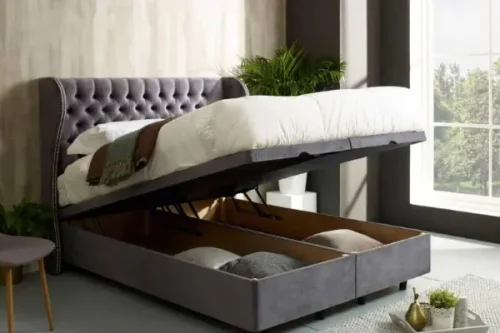
Ottomans use gas struts to lift the mattress platform, giving you a full under-bed storage compartment.
These frames are usually strong and can last 15 years or more, but the lifting mechanism may need replacement over time.
A little oil and routine checks will keep it moving smoothly.
Construction & Design Details That Make Frames Last Longer
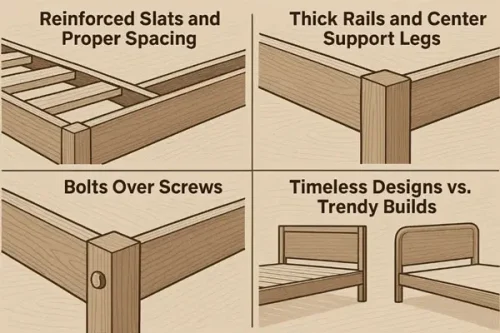
Even the best materials won’t save a bed frame if the build quality isn’t there.
Pay attention to these design details — they can make the difference between a frame that holds steady for decades and one that lets you down too soon.
Reinforced Slats and Proper Spacing
Slats are the backbone of mattress support.
Solid wood or metal slats last far longer than flimsy particleboard ones.
Look for slats that are reinforced in the center and spaced no more than 3 inches apart.
Wider gaps put extra stress on your mattress and shorten its life.
Thick Rails and Center Support Legs
A strong frame needs thick side rails to carry weight evenly.
For larger sizes (queen, king, California king), make sure there’s at least one center leg running down the middle.
Without it, the frame can sag over time.
Bolts Over Screws
Hardware matters.
Frames held together with bolts are sturdier than those relying on small screws or staples, which loosen faster.
Bolted joints can be tightened when needed, keeping the frame solid year after year.
Timeless Designs vs. Trendy Builds
Trendy frames may look cool today but often use cheaper shortcuts to hit a price point.
A classic hardwood or powder-coated metal frame with clean lines not only lasts longer but also stays in style.
Think of it as an investment piece — one that won’t feel outdated in five years.
Cost vs. Lifespan: Why Cheap Frames Cost More in the Long Run

At first glance, that bargain bed frame on sale might seem like a smart buy.
But here’s the catch — cheap frames built from MDF, particleboard, or thin metal tubing usually last only 3–5 years before they start to wobble, squeak, or break down.
Once you’ve replaced them a couple of times, you’ve already spent more than you would have on a quality frame.
Now compare that with a solid hardwood or steel frame.
Sure, it costs more upfront, but with a lifespan of 10–30 years, the cost per year is far lower.
Instead of shelling out for a new frame every few years, you buy once and sleep easy for decades.
Think of it like this: durability isn’t just about strength, it’s about long-term value.
A well-built frame saves you money, hassle, and trips to the furniture store.
Which Bed Frame Lasts the Longest?

If you just want the quick answer, hardwood and metal frames top the list.
Metal frames usually hold steady for 10–15 years, while hardwood can go 20–30 years with proper care.
Other types — upholstered, storage, divan, and ottoman — can last a good while too, but they rely more on upkeep and hardware quality.
Here’s a side-by-side breakdown to make it clear at a glance:
Bottom line: if you’re looking for the longest-lasting frame, go for hardwood or metal. If storage is a priority, divan and ottoman frames are solid choices, but expect a bit more maintenance over time.
Expert Tips to Extend Your Bed Frame’s Lifespan
A sturdy frame can last decades, but only if you give it a little attention now and then.
Here are some easy ways to keep yours in top shape:
- Tighten the hardware. Bolts and screws loosen over time, especially if you move the bed. A quick check every few months keeps things solid.
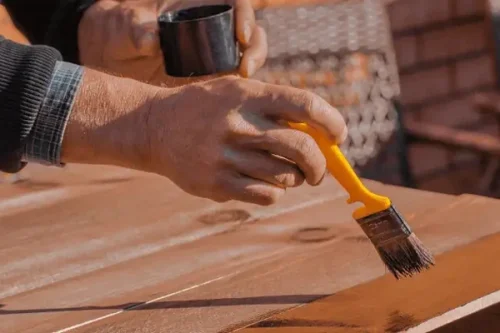
- Polish and seal wood. Hardwood frames stay strong when you protect them from scratches and moisture. A light polish or wax once or twice a year goes a long way.
- Prevent rust on metal. Wipe down metal frames if you live in a humid area and touch up scratches so moisture doesn’t sneak in.
- Vacuum and protect upholstery. Fabric frames benefit from regular cleaning. A fabric protector spray helps prevent stains from setting in.
- Lubricate storage mechanisms. Drawers, hinges, or gas struts work best with an occasional check and a dab of oil when needed.
- Inspect and replace slats. Slats carry the weight of the mattress and sleepers, so swap out cracked or bent ones before they cause sagging.
Pro tip: Don’t overload your bed frame. Whether it’s extra-heavy storage in drawers or too much pressure on slats, respecting the weight limits keeps your frame steady for years.


 English
 Spanish
 Portuguese
 Russian
 Arabic
 Japanese
 Korean
 German
 French
