

Finding the best mattress for a Murphy bed requires more than choosing something comfortable — it must also fit the bed’s cabinet depth, work safely with vertical storage, and support your body properly.
Because Murphy beds fold upright, not every mattress is compatible, and the wrong choice can cause sagging, poor sleep, or difficulty closing the bed.
In this guide, we highlight the best mattresses for Murphy beds and explain the key factors to consider, including ideal thickness, materials, and weight.
Whether your Murphy bed is for daily use or occasional guests, this guide will help you choose a mattress that fits correctly and performs well long-term.

Best Mattresses for Murphy Beds (Top Recommendations)
#1. Nectar Classic – Best Overall for Most Murphy Beds

Price: $699–$1,798
Why it Works Well in Murphy Beds:
The Nectar Classic is a 12-inch all-foam mattress — the ideal height range for most Murphy beds — offering strong pressure relief, medium-firm support, and reliable structural stability when stored vertically.
Its foam construction avoids the coil-shift problems that many hybrids and innerspring models develop in upright storage, making it a safe and versatile choice for daily or occasional Murphy bed use.
Key Benefits for Murphy Beds:
- 12-inch profile fits most Murphy bed cabinets without over-compressing the mechanism
- All-foam build resists slumping during vertical storage
- Excellent motion isolation, ideal if your Murphy bed is in a shared or small room
- Medium-firm feel (6.5/10) suits back, side, and combination sleepers
- Good pressure relief, especially for back sleepers according to testers
- 365-night trial + lifetime warranty provides strong buyer protection
Best For:
- Back sleepers who need balanced contouring and support
- Couples who want minimal motion transfer
- Murphy beds used daily or frequently
- Shoppers wanting an affordable foam option that still performs well
Potential Drawbacks:
- Edge support is weaker than some hybrids
- Not soft enough for strict side sleepers with sensitive joints
#2. Leesa Original – Best Cooling Foam Mattress for Murphy Beds

Price: $839–$2,178
Why it Works Well in Murphy Beds:
The Leesa Original is a 10-inch all-foam mattress — ideal for Murphy beds with tighter cabinet clearance.
Its breathable foam layers help prevent heat buildup, making it a great option for guest rooms, studios, or compact spaces.
The medium-firm feel provides balanced support without feeling too stiff.
Key Benefits for Murphy Beds:
- 10-inch height fits nearly all Murphy beds
- Breathable foams help regulate temperature
- Medium-firm feel suits most sleepers
- Strong edge support for a foam mattress
- Excellent motion isolation for shared Murphy beds
Best For:
- Hot sleepers
- Back and side sleepers
- Murphy beds in small or poorly ventilated rooms
Potential Drawbacks:
- Firmer overall feel may not suit those who prefer deep sinkage
#3. DreamCloud Original – Best Hybrid Option for Murphy Beds

Price: $849–$1,599
Why it Works Well in Murphy Beds:
While foam mattresses are generally the safest choice, the DreamCloud Original is one of the few hybrids that can still work in some Murphy beds thanks to its 12-inch height and durable coil system.
It offers a hotel-like firmness and strong lumbar support.
Key Benefits for Murphy Beds:
- 12-inch height fits many Murphy bed cabinets
- Firm, lifted feel works well for back sleepers
- Coils add airflow for cooler sleep
- Excellent edge support expands usable surface space
Best For:
- Back sleepers needing extra support
- Hot sleepers wanting airflow
- Murphy beds used frequently
Potential Drawbacks:
- Hybrids are heavier → confirm mechanism weight limits
- Not ideal for strict side sleepers
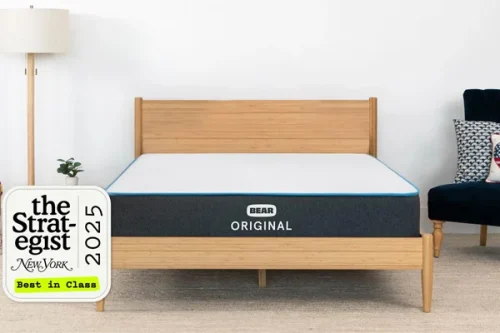
#4. Bear Original – Best for Murphy Beds Used by Back Sleepers
Price: $786–$1,922
Why it Works Well in Murphy Beds:
The Bear Original is a 10-inch foam mattress known for its firmer feel, spinal alignment, and cooling gel-infused foam. Its lighter weight and all-foam build make it safe for vertical storage.
Key Benefits for Murphy Beds:
- 10-inch height fits tighter Murphys
- Firm feel supports spinal alignment
- Gel foam helps minimize heat buildup
- Very good motion isolation
Best For:
- Back sleepers
- Murphy beds used nightly
- Sleepers needing lumbar support
Potential Drawbacks:
- Too firm for many side sleepers
#5. Saatva Classic (11.5″) – Best Luxury Mattress for Murphy Beds

Price: $1,395–$2,990
Why it Works Well in Murphy Beds:
Among the few innerspring options compatible with Murphy beds only when using the 11.5-inch model, the Saatva Classic offers premium support, a Euro top, and excellent durability.
Unlike thick hybrids, the 11.5″ version stays within most clearance limits.
Key Benefits for Murphy Beds:
- 11.5-inch version fits many Murphy frames
- Multiple firmness options
- Strong edge support enhances stability
- Excellent responsiveness for combination sleepers
Best For:
- Those who prefer a traditional innerspring feel
- Back and stomach sleepers
- Luxury Murphy bed setups
Potential Drawbacks:
- Heavier than foam beds — check mechanism limits
- Motion isolation is weaker
#6. Helix Midnight – Best Cooling Hybrid for Murphy Beds

Price: $937–$1,749
Why it Works Well in Murphy Beds:
The Helix Midnight is an 11.5-inch hybrid that fits inside many Murphy bed cabinets while offering great airflow and cooling performance.
It’s slightly softer than medium-firm, giving pressure relief without too much sink.
Key Benefits for Murphy Beds:
- 11.5-inch height within acceptable range
- Hybrid design enhances airflow
- Very good cooling performance
- Balanced feel for multiple sleeping styles
Best For:
- Hot sleepers
- Combination sleepers
- Murphy beds in warm climates
Potential Drawbacks:
- Less motion isolation than all-foam models
#7. WinkBeds GravityLux – Best Pressure Relief for Murphy Beds

Price: $1,199–$1,999
Why it Works Well in Murphy Beds:
As a high-quality foam mattress available in multiple firmness levels, the GravityLux delivers excellent pressure relief and spinal alignment while maintaining a Murphy-friendly profile.
Key Benefits for Murphy Beds:
- All-foam construction avoids slumping
- Multiple firmness levels suit a wide range of sleepers
- Strong edge support for a foam mattress
- Great for couples due to motion control
Best For:
- Sleepers wanting deep contouring without coils
- Couples
- People needing customizable firmness
Potential Drawbacks:
- Pricing is higher than budget foam options
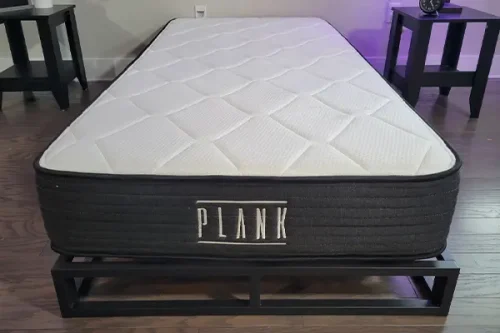
#8. Plank Firm by Brooklyn Bedding – Best Firm Mattress for Murphy Beds
Price: $749–$1,532
Why it Works Well in Murphy Beds:
This extra-firm 11-inch foam mattress is ideal for sleepers who prefer a very supportive feel or need help keeping hips aligned.
Its slim profile fits most Murphy bed frames safely.
Key Benefits for Murphy Beds:
- Firmest feel among the group
- 11-inch height is Murphy-compatible
- Flippable design (Firm / Extra Firm)
- Great support for back and stomach sleepers
Best For:
- Stomach sleepers
- Back sleepers who need a very firm surface
- Small spaces where firm edges help stability
Potential Drawbacks:
- Too firm for side sleepers or lighter individuals
#9. Nolah Original – Best Murphy Bed Mattress for Couples

Price: $999–$2,398
Why it Works Well in Murphy Beds:
The Nolah Original (10″) uses adaptive AirFoam, offering great pressure relief without feeling slow or “stuck.”
It excels in motion isolation and stays lightweight enough for safe Murphy bed use.
Key Benefits for Murphy Beds:
- 10-inch height suits all Murphy beds
- AirFoam sleeps cooler than traditional memory foam
- Excellent motion isolation for couples
- Medium firmness works for most sleepers
Best For:
- Couples
- Sleepers needing pressure relief
- Murphy beds with tight clearance
Potential Drawbacks:
- Not supportive enough for heavier sleepers
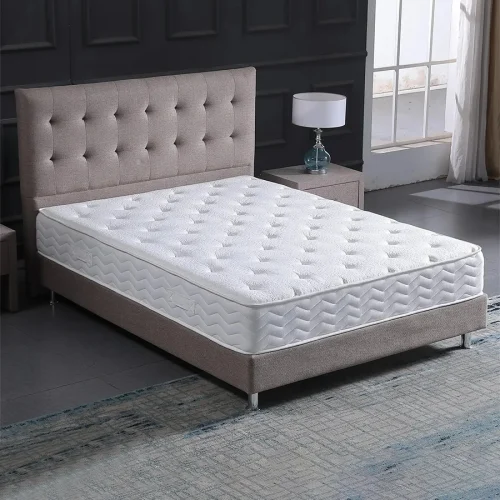
#10. SUNSGOODS Memory Foam Hybrid Mattress – Best Customizable Mattress for Murphy Beds
Price: Available upon request through sales department
Why it Works Well in Murphy Beds:
As a hybrid mattress designed for OEM/B2B clients, the SUNSGOODS Memory Foam Hybrid Mattress offers rare flexibility that most retail mattresses can’t match.
Since Murphy beds require specific heights, weights, and material configurations, the ability to customize foam density, coil type, and overall profile makes this model ideal for businesses designing Murphy-bed solutions or private-label products.
The mattress combines contouring memory foam with a supportive hybrid core, creating a balanced feel that suits daily-use Murphy beds without becoming overly heavy or too thick for cabinet storage.
Key Benefits for Murphy Beds:
- Customizable height (including 8–12 inches) to fit Murphy bed cabinet depth
- Adjustable material configuration — foam layers, coil gauge, density, and firmness
- Memory foam comfort layer reduces pressure and motion transfer
- Hybrid support system adds stability while controlling weight
- Suitable for both residential and hospitality Murphy bed applications
- Manufacturer-direct quality control ensures consistent performance
Best For:
- B2B clients needing custom-built Murphy bed mattresses
- Hospitality, apartment, and furniture brands rebranding or private labeling
- Murphy beds requiring precise height and weight matching
- Buyers wanting memory foam contouring with hybrid support
Potential Drawbacks:
- Pricing not listed publicly (available via sales inquiry)
- Custom configurations require lead time compared to ready-made retail models
Key Factors When Choosing a Murphy Bed Mattress
Selecting a mattress for a Murphy bed requires more precision than choosing one for a traditional frame.
Because the bed folds upright and relies on cabinet depth, weight limits, and hardware mechanisms, the wrong mattress can cause sagging, improper closure, or mechanical strain.
Below are the key factors to evaluate before making a purchase.
Ideal Mattress Thickness

The most important compatibility factor is thickness.
- The ideal range is 10–12 inches, which balances comfort and proper cabinet closure.
- Too thick (over 12″) can prevent the Murphy bed from folding or latching.
- Too thin (under 8–9″) often compresses quickly and lacks support.
- Always check your Murphy bed’s maximum depth specification, including space for bedding straps or retention bars.
Mattress Weight

Murphy beds use pistons or spring-lift mechanisms that are calibrated for specific weight limits.
- Lighter mattresses (typically all-foam or low-profile hybrids) reduce strain on the hardware.
- Heavier mattresses—especially thick hybrids or latex—can make lifting difficult or damage the mechanism over time.
- For most standard Queen Murphy beds, lighter foam constructions are far safer than dense coil-heavy models.
Compatibility With Vertical Storage
Murphy beds store mattresses in a fully upright position, creating unique structural challenges.
- Gravity causes materials to settle downward, a process known as slumping.
- Foam mattresses resist slumping best, maintaining shape over long periods.
- Coil systems, natural fibers, and heavy latex can shift or compress unevenly, creating body impressions.
- Durable, high-density foams and reinforced base layers provide better long-term stability in vertical storage.
Mattress Flexibility Based on Murphy Bed Design
Not all Murphy beds close the same way:
- Some fold completely flat up into the wall.
- Others use a slight bend as they lift, requiring a mattress with more flexibility (typically all-foam).
- Cabinet-slide systems may have additional clearance restrictions.
Always review the manufacturer’s notes on mattress compatibility for your specific Murphy bed model.
Material Performance Comparison
Memory Foam — Best Overall for Murphy Beds

- Lightweight, flexible, and highly compatible with vertical storage
- Excellent pressure relief and motion isolation
- Performs well on platform-style Murphy bed bases
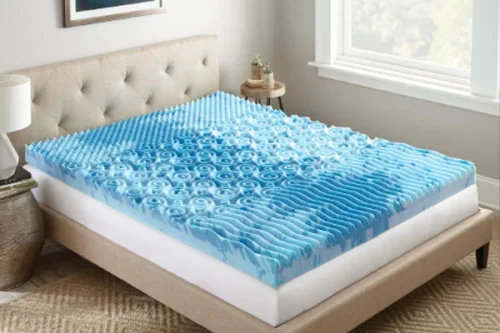
Gel Memory Foam — Best for Hot Sleepers
- Similar benefits to memory foam
- Enhanced cooling through gel infusions or breathable designs
Poly Foam — Budget-Friendly Option

- Lightweight and flexible
- Suitable for Murphy beds if constructed with supportive high-density foams
Hybrid — Conditional Compatibility

- Offers bounce and strong edge support
- Must fit height and weight limits; many hybrids are too heavy or thick
- Choose only lighter, thinner hybrids confirmed to be Murphy-bed compatible
Latex — Generally Not Recommended

- Very heavy and dense
- More prone to slumping
- Can stress lifting mechanisms
Innerspring — Not Suitable

- Coils shift when vertical
- No box spring allowed
- Higher risk of hollowing and uneven wear
Firmness Recommendations
The best firmness depends on sleep position, but for Murphy beds:
- Medium to medium-firm works best for most sleepers and for foam-based structures.
- Back sleepers benefit from medium-firm support.
- Side sleepers need slightly softer comfort layers but must stay within height limits.
- Stomach sleepers should choose firm options to prevent hip sinkage.
Murphy beds use flat platforms rather than box springs, so mattresses with firmer base layers generally perform better.
Cooling, Support & Edge Performance
Cooling
Murphy beds are often placed in smaller rooms, which can trap heat.
- Choose breathable foam designs or gel foams for better airflow.
- Hybrids cool naturally but may not always meet weight requirements.
Support
- Proper spinal alignment is essential, especially on platform bases.
- Multi-layer foams with supportive cores work best.
Edge Support
Murphy beds often sit in confined spaces, meaning people sit on the edge while entering or exiting.
- Strong edge support improves safety, especially for older adults or guests.
- Hybrids have the best edge support, but some foam mattresses include reinforced edges to compensate.
Mattress Sizes & Fit for Murphy Beds

Selecting the correct mattress size is essential for ensuring your Murphy bed operates smoothly and fits safely inside its cabinet.
While most Murphy beds follow standard U.S. mattress dimensions, not every size is equally practical due to weight, cabinet depth, and space requirements.
Common Compatible Sizes
Most Murphy bed systems are designed for the following standard sizes:
- Twin:
Ideal for small rooms, children, dorms, and tight studio layouts. Lightweight and easy for lifting mechanisms to support. - Full (Double):
A popular choice for guest rooms and single adults. Offers more sleeping space without adding excessive weight. - Queen:
The most common Murphy bed size. Provides ample room for couples and fits well in most modern Murphy bed cabinets.
These three sizes provide the best balance between comfort, safety, and compatibility with wall-bed mechanisms.
Why King-Size Murphy Beds Are Rare
King and California King Murphy beds exist, but they are uncommon due to several key limitations:
- Cabinet Size: King-size cabinets require significant wall space and often overpower the room.
- Weight: A king mattress is heavy, increasing the risk of mechanical strain.
- Balance Issues: Wider mattresses distribute weight unevenly when stored vertically.
- Higher Manufacturing Cost: Fewer manufacturers produce compatible hardware for king-size wall beds.
For most installations, Queen is the largest practical and commonly available size.
Ensuring a Proper Fit Inside the Cabinet
Even if the mattress matches the platform size, it must also fit the internal cabinet dimensions. To avoid installation problems:
- Check maximum mattress height allowed by the frame (usually 10–12 inches).
- Confirm the cabinet’s interior width and height, ensuring no friction during lifting.
- Leave room for retention straps, brackets, or locking mechanisms.
- Verify space for bedding thickness, if your model allows sheets to remain on.
A mattress that is too tall, too wide, or too heavy may prevent the bed from closing or may interfere with proper locking.
How to Measure Cabinet Depth and Clearances
Before purchasing a mattress, measure your Murphy bed carefully:
- Cabinet Depth:
Measure from the inside of the cabinet back to the front edge.
This determines the maximum mattress height (depth when folded). - Cabinet Height & Width:
Measure the interior from top to bottom and side to side.
Ensure the mattress fits without pressing against the sides. - Platform Length & Width:
Confirm the mattress matches the platform exactly—no overhang. - Hardware Clearance:
Account for hinges, lifting pistons, bedding straps, and any metal frames.
Accurate measurements prevent common issues such as the bed failing to latch, sticking during lifting, or causing long-term wear on the mechanism.
Warranty & Trial Period Considerations

When choosing a mattress for a Murphy bed, it’s essential to review the warranty and trial policies carefully.
Murphy beds place mattresses under unique conditions—primarily vertical storage—which not all manufacturers support.
Understanding these terms helps protect your investment and ensures long-term performance.
Why Some Warranties Don’t Cover Vertical Storage
Most mattress warranties assume the mattress will be used on a traditional bed frame. Vertical storage introduces forces that can cause:
- Material compression or slumping
- Shifting of coils or support layers
- Indentations from gravity over time
- Strain on the side panels and perimeter
Because these issues can appear prematurely in mattresses not designed for upright positioning, many brands exclude Murphy bed use from their warranty coverage.
Before purchasing, look for manufacturers that explicitly state compatibility with:
- Wall beds
- Murphy beds
- Vertical or cabinet-style storage
If the policy is unclear, always confirm with the seller.
What to Check Before Purchasing

To avoid warranty voids or unexpected issues, review the following:
Mattress Height and Weight Requirements
Your Murphy bed’s manual will specify a maximum depth and recommended weight.
Using a mattress outside these limits may void either the bed warranty, the mattress warranty, or both.
Approved Foundations and Use Cases
Most warranties require the mattress to be placed on a flat, supportive foundation.
Murphy bed platforms generally qualify, but always verify that:
- The mattress does not require a box spring
- Platform bases are accepted
- Vertical storage does not violate the policy
Maintenance Responsibilities
Some warranties require the user to:
- Rotate the mattress periodically
- Keep it supported evenly
- Avoid leaving the bed closed for excessively long periods
These conditions help minimize material shifting from upright storage.
Damage and Indentation Clauses
Check whether impressions caused by gravity-based settling are covered.
Many warranties only cover indentations deeper than a certain threshold (e.g., 1″ or 1.5″).
Minimum Recommended Sleep Trial Lengths
For Murphy bed use, a generous sleep trial is ideal because vertical storage can affect the mattress differently over time.
Industry-leading trials typically range from:
- 90 nights — Minimum recommended
- 120–180 nights — Ideal for evaluating long-term support
- 365 nights — Best for seasonal or occasional Murphy bed use
A longer trial allows you to evaluate:
- Whether the mattress closes properly in the cabinet
- How well it decompresses after being stored upright
- Whether comfort and support remain consistent over weeks or months
This flexibility is especially valuable for Murphy beds used only occasionally, such as in guest rooms.


 English
 Spanish
 Portuguese
 Russian
 Arabic
 Japanese
 Korean
 German
 French
