


Why Convert a Box Spring Into a Platform Bed?

Switching from a box spring to a platform bed is an easy upgrade that instantly makes your bed feel sturdier and more modern.
A platform design gives your mattress a clean, streamlined look, and you don’t have to deal with the bulk or noise of an old box spring.
You also get better mattress support.
Many newer foam and hybrid mattresses are designed to sit on a solid or slatted base—not on springs that can sag over time.
And the best part? It’s a budget-friendly upgrade.
Instead of buying a whole new bed frame, you can reuse what you already have and get a fresh, comfortable setup for a lot less.
Before You Start — Choose Your Conversion Method
Before you grab your tools, you’ll want to decide which approach makes the most sense for your setup.
There are two main ways to do this project, and both work well—you just need to pick the one that fits your bed frame, your skill level, and the look you want.
Method 1: Add a Platform Surface to Your Existing Bed Frame (Beginner-Friendly)

This is the easiest option for most people.
If you already have a wooden bed frame with side rails, you can simply add a platform surface—either slats or plywood—so your mattress can sit directly on top.
This method is great because:
- It works with most standard frames
- You don’t need many tools
- You don’t have to modify the box spring at all
- It creates a sturdy, supportive base for foam or hybrid mattresses
If you want something quick, simple, and solid, this is usually the best choice.
Method 2: Convert the Box Spring Into a Platform Base (Upholstered Style)

If you like the idea of reusing your box spring instead of tossing it, this method gives you a clean, stylish upgrade.
You’ll remove the fabric, reinforce the frame, and turn the box spring itself into a platform bed with legs.
This method is ideal if you want:
- A low-profile, modern look
- A chance to customize the fabric or upholstery
- Mid-century or decorative legs
- A budget-friendly way to reuse your materials
It’s a bit more hands-on than Method 1, but the final result looks polished—almost like something you’d buy in a store.
Tools and Materials Needed (Both Methods)
Before you start building, make sure you’ve got the basics on hand.
Here’s a simple list of the tools and materials you’ll use for either conversion method:
Tools
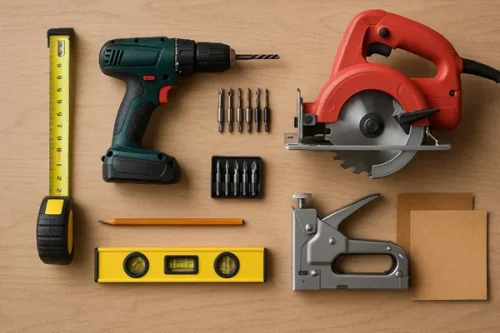
- Measuring tape
- Drill or cordless driver
- Drill bits + screwdriver bits
- Circular saw or miter saw (for cutting wood)
- Pencil or marker for marking cuts
- Level
- Staple gun (optional — for upholstery work)
- Sandpaper (optional — for smoothing cut edges)
Materials

- ¾” plywood or slat boards
- 2×2 or 2×4 lumber (for support rails or reinforcement)
- Screws (2″ and 3–3½” recommended)
- Joist hangers or furniture leg plates
- Wood glue (optional)
- Upholstery fabric (optional — for covering a box spring)
- Furniture legs (optional — for Method 2)
- Felt pads or floor glides (optional — protects flooring)
- Bunkie board (optional alternative to cutting slats)
METHOD 1 — Add Platform to an Existing Bed Frame

If you already have a standard wooden bed frame, this is usually the quickest and most beginner-friendly way to create a platform-style base.
All you’re doing is adding a solid surface—slats or plywood—so your mattress can sit directly on the frame without a box spring.
Step 1 — Remove Old Box Spring Supports
Before you build anything new, clear out whatever’s inside your frame now.
- Remove the old metal bars or wooden slats
- Make sure the inside of the frame is empty and ready for new supports
- Check that the side rails are sturdy and not cracked
This gives you a clean foundation to start building your platform surface.
Step 2 — Install Side Support Rails
Next, you’ll add the rails that will hold your platform.
- Use 2×2 lumber for both sides
- Mount each rail about ½ inch below the top of the bed’s side panels (this keeps the platform flush)
- Pre-drill and screw them securely into the frame
- Leave a little room near the corners so the frame hardware still works
These rails act like shelves that support the platform.
Step 3 — Add Head and Foot Support Rails
Now add the supports at the top and bottom of the bed.
- Use 2×4 lumber for these rails
- Line up their top edges with the side supports you just installed
- Make sure everything sits level so your mattress won’t tilt
This step keeps the platform sturdy and evenly supported across the frame.
Step 4 — Install Middle Supports
Middle supports are key—especially for larger beds.
- Add one or two center rails, depending on the bed size
- Attach them using joist hangers for strong, stable connections
- Space them evenly (a simple way: divide the frame length by three)
- Absolutely required for queen and king beds to prevent sagging
These supports carry the weight in the middle where it matters most.
Step 5 — Add Platform Slats or Plywood
Now you’ll create the actual surface your mattress will sit on.
You can choose slats or a solid sheet.
Option A: Slats
- Rip ½-inch plywood into strips about 3 inches wide
- Lay them across the supports, spaced 2–3 inches apart for airflow
- Screw them down or leave them floating with spacers
This option is lightweight and great for ventilation.
Option B: Solid Plywood Sheet
- Cut a ¾-inch plywood sheet to the interior size of your frame
- Place it on top of the support rails
- Sand the edges so it doesn’t snag bedding or upholstery
This creates a firm, supportive base—perfect for foam mattresses.
Optional: Use a Bunkie Board
If you don’t want to cut wood at all:
- A bunkie board works as a ready-made platform
- You still need the support rails installed underneath
It’s the fastest way to finish this project with minimal cutting.
Step 6 — Add Slat Spacers (Optional but Useful)
If you’re using slats, spacers help keep everything neat and evenly spread.
- Cut small 1.5-inch blocks from your leftover slat material
- Glue or lightly tack them between the slats
- Helps prevent shifting and keeps the mattress weight evenly supported
Spacers aren’t required, but they give your platform a more polished, professional feel.
METHOD 2 — Convert the Box Spring Into a Platform Bed

If you don’t want to toss your box spring—or you like the idea of giving it a fresh, modern look—this method is a great option.
You’ll turn the box spring itself into a standalone platform bed, complete with legs and a solid surface for your mattress.
Step 1 — Strip the Box Spring
Start by removing everything that’s covering the frame.
- Take off the outer fabric and dust cover
- Pull out any padding or mesh
- If your box spring has metal springs, remove those too
- You should be left with the basic wooden frame
This gives you a clean base to reinforce and rebuild.
Step 2 — Reinforce the Frame Structure
Most box springs weren’t designed to hold weight on their own, so strengthening the frame is important.
- Add 2×4 supports anywhere the frame feels weak or flexible
- Create a solid top using either:
- Slats spaced 2–3 inches apart for airflow, or
- A ¾-inch plywood sheet for a firm, even surface
Once reinforced, the box spring acts just like a real platform bed frame.
Step 3 — Add Bed Legs for Support
Here’s where the transformation really happens.
- Install furniture leg plates at all four corners
- Add at least one center leg to prevent sagging
- Choose a leg height that fits your style—most people prefer 6–12 inches
- Add felt pads or floor glides to protect your flooring and make the bed easier to move
Once the legs are attached, flip the structure upright and check that everything feels stable.
Step 4 — Reupholster the Box Spring (Optional)
If you want your DIY platform bed to look clean and store-bought, a fresh layer of fabric makes a big difference.
- Wrap the whole frame in upholstery fabric
- Staple the fabric neatly along the underside
- Fold and secure the corners so they look smooth and finished
This step is optional, but it’s a simple way to give your platform bed a polished, custom look.
Safety Considerations and When Not to Convert

Before you start building, take a moment to make sure your setup is safe and strong enough for this project.
A few quick checks can save you a lot of headaches later.
When You Shouldn’t Do This Conversion
- Rolling metal frames aren’t compatible.
These lightweight frames can’t support a platform surface, and modifying them usually takes more work than it’s worth. - Avoid using a damaged box spring.
If the wooden rails are cracked, warped, or loose, the structure won’t be safe even after reinforcement. - Skip the project if the frame feels unstable.
Your bed frame should be solid with no wobbling or flexing. If it already feels weak, it won’t hold a platform reliably.
General Safety Tips
- Add center support for anything bigger than a twin.
Full, queen, and king mattresses need at least one center rail or a center leg to prevent sagging. - Use the right screw length.
Screws that are too short won’t hold; screws that are too long can split the wood or poke through the other side. - Double-check level and alignment.
A slightly uneven platform can cause your mattress to wear out faster or slide around. - Work slowly when cutting wood.
Keep your hands clear, wear safety glasses, and always support your materials properly while cutting.
Cost Breakdown (Estimated)

One of the nice things about converting a box spring to a platform bed is that you can upgrade your setup without spending a lot.
Your final cost depends on the method you choose and what materials you already have on hand, but here’s a general idea of what most people spend:
- Wood: $20–$60
(2×2 or 2×4 boards for support rails) - Plywood: $35–$60
(¾” plywood for a solid platform or ½” plywood for slats) - Bed legs: $20–$50
(Only needed if you’re turning the box spring into a standalone base) - Hardware: $10–$25
(Screws, joist hangers, or leg plates) - Optional fabric: $10–$40
(For reupholstering the box spring if you want a polished look)
Total Estimated Cost:
$40–$150, depending on the method and materials you choose.
This makes the project one of the most budget-friendly ways to refresh your bed without buying a whole new frame.
Troubleshooting & Common Mistakes

Even with a simple DIY project like this, a few small issues can show up.
Here are the most common problems people run into, along with easy fixes.
Platform sagging
This usually means the middle of the bed isn’t supported well enough.
Add one or two center supports or a center leg to strengthen the frame.
Mattress sliding around
Foam and hybrid mattresses can shift on a smooth surface.
Use a non-slip mat or gripper pads to keep the mattress from moving.
Noisy joints or creaking
If you hear squeaking, a screw or joint is probably loose.
Tighten all screws and add felt strips or thin padding between wood joints to quiet the frame.
Slats shifting out of place
If the slats move when you sit or roll over, they need better spacing or attachment.
Add spacers between them or screw the slats down to keep everything aligned.


 English
 Spanish
 Portuguese
 Russian
 Arabic
 Japanese
 Korean
 German
 French
