

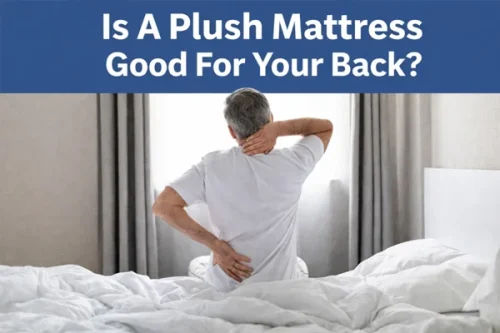
It Depends on the Cause of Pain

There is no single “yes” or “no” answer; whether a plush mattress helps or hurts depends on your specific physical needs.
- Sleeping Position: Plush mattresses are generally best for side sleepers because they allow hips and shoulders to sink in, relieving pressure. However, back and stomach sleepers often require firmer surfaces to keep the spine flat and aligned.
- Body Weight: Lighter individuals often need plush mattresses to feel any cushioning at all. Conversely, heavier individuals may sink too deeply into a soft mattress, causing the spine to curve unnaturally.
- Type of Pain: A plush surface is ideal for relieving sharp pressure points in joints. However, it may lack the structural support necessary for those suffering from chronic lower back instability.
When a Plush Mattress is GOOD for Your Back

- Pressure Point Relief: Plush mattresses excel at contouring or “hugging” the body, which helps distribute weight evenly and relieve tension in sensitive areas like joints. This cushioning is particularly beneficial for individuals suffering from muscle aches or joint pain.
- Side Sleepers: Side sleepers often require a softer surface to allow their hips and shoulders to sink in slightly. This “give” prevents stress on these joints and helps maintain proper spinal alignment by keeping the spine straight rather than jammed upwards.
- Lightweight Sleepers: Lighter individuals may find firmer mattresses too rigid because they do not weigh enough to compress the materials. A plush mattress ensures they receive necessary contouring and support without feeling like they are sleeping on a hard surface.
- Motion Isolation: Plush mattresses, particularly those made of foam, are effective at absorbing movement. This reduces motion transfer between partners, minimizing sleep disruptions that can lead to tossing, turning, and increased back tension.
When a Plush Mattress is BAD for Your Back

- The “Hammocking” Effect: Plush mattresses can cause heavier body parts, like the hips, to sink too deeply, creating a “hammocking” effect. This lack of deep support pulls the spine out of natural alignment and can worsen existing back conditions.
- Stomach and Back Sleepers: These positions typically require a flatter, stable surface to maintain neutral spine alignment. A plush mattress often allows excessive sinking of the torso and hips, leading to poor posture and discomfort.
- Heavier Individuals: People with higher body weight may sink through the soft comfort layers and fail to receive adequate spinal support. This excessive sinking risks putting the spine in an unnatural curve, resulting in strain or injury.
- Heat Retention Risks: Plush mattresses, especially those containing memory foam, tend to retain more body heat compared to firmer options. This can cause discomfort for sleepers who run hot, leading to restless sleep.
Troubleshooting: Is it “Too Plush” or Just “Too Old”?

- The Age Factor: Do not confuse a mattress designed to be plush with one that is simply old and sagging. An aged mattress loses its structural integrity and motion isolation capabilities, which can lead to back pain regardless of its original firmness level.
- The Topper Trap: A mattress topper should not be needed to make a bed supportive. If you are adding a topper to try and fix a lack of support, the mattress is likely worn out or fundamentally the wrong choice for your needs.


 English
 Spanish
 Portuguese
 Russian
 Arabic
 Japanese
 Korean
 German
 French
