

Choosing between a soft or firm mattress for lower back pain can feel confusing.
Older advice said to “go firm,” but newer research shows the right choice really depends on the sleeper.
What matters most is how well a mattress keeps the spine aligned while still easing pressure.
In this guide, we’ll break down what actually works based on body weight, sleep position, and real-world comfort—so you can confidently guide your customers or choose the best options for your product lineup.

Soft vs Firm Mattresses: How They Affect Your Lower Back
Most customers asking about lower back pain really want to know which option keeps the spine neutral all night.
Here’s a simple breakdown you can use when guiding them.
Soft Mattresses

Soft mattresses let the body sink in more, which can feel great for pressure relief—especially for side sleepers.
The issue is when the hips sink too deeply, the spine curves downward, leading to morning lower back pain.
Lightweight sleepers can often handle softer beds, but average and heavier sleepers may find them less supportive.
Firm Mattresses

Firm beds keep you more “on top” of the surface.
This helps back and stomach sleepers keep their hips elevated and spine aligned.
But they don’t contour much, which may create pressure points or feel too rigid for lighter sleepers.
Why Medium-Firm Works for Most People
Medium-firm strikes the balance: enough cushion to relieve pressure, enough support to prevent sagging.
Research consistently shows it’s the most effective firmness level for reducing lower back pain and improving sleep quality.
It also appeals to a wide range of customers, which makes it a smart option for wholesalers, distributors, and brand owners looking for broad market fit.
What Research Says About Firmness & Lower Back Pain

Research shows that neither an extra-soft nor an extra-firm mattress is ideal for lower back pain.
Studies consistently point to medium-firm as the most effective level for reducing pain and improving sleep quality.
Why?
A very firm mattress doesn’t contour enough to ease pressure, while a very soft one lets the hips sink too far, pulling the lower spine out of alignment.
Medium-firm strikes the balance—supportive enough to stabilize the back, but comfortable enough to let muscles relax.
For wholesalers, distributors, and brand owners, this makes medium-firm models a reliable choice for customers dealing with back pain.
How to Choose Soft or Firm Based on Your Situation
There’s no one-size-fits-all answer for lower back pain.
The right firmness depends on pain type, body weight, and sleep position.
Here’s a simple way to guide customers toward the best choice.
Choose Based on Pain Pattern

- Lower back/lumbar pain: Usually need a firmer support core to keep the hips from sinking.
- Morning stiffness: Common sign a mattress is too soft and lacking support.
- Pressure point pain: Shoulders and hips may need a bit more cushioning on top.
Choose Based on Body Weight

- Lightweight (<150 lbs): Soft–medium feel works best because they don’t sink as deeply.
- Average weight (150–230 lbs): Most people land comfortably on medium or medium-firm.
- Heavy (>230 lbs): A firmer mattress or supportive hybrid helps maintain alignment.
Choose Based on Sleep Position

- Side sleepers: Need more pressure relief → soft–medium.
- Back sleepers: Better off with medium-firm for neutral spine support.
- Stomach sleepers: A firm surface keeps hips elevated.
- Combination sleepers: A responsive medium-firm mattress makes movement easy.
Choose Based on Personal Preference
Comfort still matters.
Even if a firmer mattress “fits the profile,” it won’t help if the sleeper can’t relax on it.
The rule is simple:
Support comes from the core; comfort comes from the top layers.
Pick the feel that works best, then choose the construction that supports it.
Mattress Design Features That Help With Lower Back Pain

When it comes to back pain relief, how the mattress is built matters just as much as firmness.
Here are the features that make the biggest difference for keeping the lower spine supported.
Soft Top + Firm Support Core
A comfortable top layer relieves pressure, while a firm support base keeps the hips from sinking.
This combo works well for most sleepers and is one of the most reliable designs for lower back pain.
Zoned Support
Mattresses with firmer support under the lower back and softer zones under the shoulders and hips help maintain a neutral spine.
It’s a simple way to offer targeted support without going “too firm.”
Supportive Materials
- Memory foam: great pressure relief
- Latex: supportive + responsive
- Hybrid: coil support + foam comfort for balanced performance
Hybrids tend to be the most versatile option for customers dealing with lower back pain.
Good Responsiveness
A responsive mattress makes movement easier and prevents the “stuck” feeling that can strain the lower back.
This is especially important for combination sleepers or anyone who changes positions often.
Is Your Mattress Too Soft or Too Firm? Key Signs

Knowing whether a mattress is too soft or too firm makes it easier to guide customers toward the right fix—or the right replacement.
Here are the most common red flags to watch for.
Signs the Mattress Is Too Soft
- Morning lower back pain
The hips sink too deeply overnight, throwing the lower spine out of alignment. - Feeling “stuck” in the mattress
Soft, slow-responding foams can make movement harder and strain the back. - Hips sinking deeper than the shoulders
A clear sign the core isn’t supportive enough. - Bottoming out
If you can feel the firm base layer underneath, the comfort layers are too soft or worn out.
Signs the Mattress Is Too Firm
- Pressure points in the hips and shoulders
A firm surface doesn’t contour enough, especially for side sleepers. - Numbness or tingling
Poor pressure relief can restrict circulation. - Waking up stiff or sore
Muscles stay tense instead of relaxing into the surface.
What to Do if Your Mattress Feels Wrong
If a mattress feels too soft or too firm, that doesn’t always mean it’s time for a replacement.
Here are a few simple adjustments you or your customers can try before investing in a new model.
Use a Mattress Topper to Adjust Firmness

- Add a firmer topper to improve support on a soft mattress.
- Add a plush topper to soften a mattress that feels too hard.
Toppers are an easy, low-cost way to dial in the right comfort level.
Rotate the Mattress

Over time, foam and comfort layers compress where weight is applied most.
Rotating the mattress every few months helps redistribute wear and often improves support.
Check the Foundation or Bed Base

A weak or sagging foundation can make a good mattress feel bad.
Make sure:
- Slats are properly spaced
- The center rail is solid
- There’s no flexing or dipping
A sturdy base = better spinal alignment.
Know When a Replacement Is Necessary

If the mattress is showing deep sagging, visible impressions, or is over 7–10 years old, it may no longer offer healthy support.
And if lower back pain keeps getting worse despite adjustments, it’s usually a sign the core has worn down.
Extra Tips to Sleep With Less Lower Back Pain
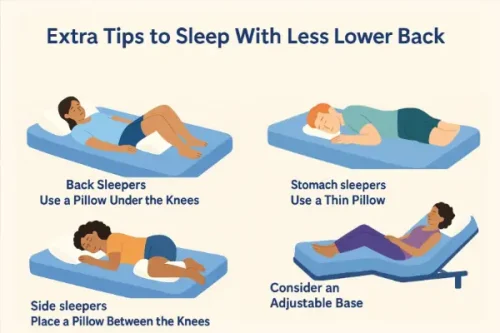
Sometimes small adjustments can make a big difference in how the lower back feels overnight.
Here are a few simple tips you can share with customers who want extra relief.
Back Sleepers: Use a Pillow Under the Knees
Lifting the knees slightly helps keep the lower spine in a neutral curve and reduces lumbar pressure.
Side Sleepers: Place a Pillow Between the Knees
This keeps the hips aligned and prevents the lower back from twisting while sleeping.
Stomach Sleepers: Use a Thin Pillow (or Change Positions)
A thick pillow can force the neck and spine into awkward angles.
A thin pillow helps—but long term, switching to side or back sleeping is usually healthier for the lower back.
Consider an Adjustable Base
Raising the upper body or slightly elevating the legs can take pressure off the lumbar area and improve comfort, especially for customers who struggle with chronic lower back pain.


 English
 Spanish
 Portuguese
 Russian
 Arabic
 Japanese
 Korean
 German
 French
