

It is honestly the worst feeling. You buy a gorgeous new sofa, and within a few months, it is covered in those annoying little fuzzballs. That is pilling. It happens when fibers break loose and tangle up, essentially making your furniture look old way before its time.
If you are wondering What Is the Best Couch Material to Avoid Pilling, the answer lies in understanding what you are actually putting in your home. Some fabrics are just built tougher than others. Knowing the difference is the secret to keeping your living room looking fresh.

What Causes Pilling on Couch Fabrics
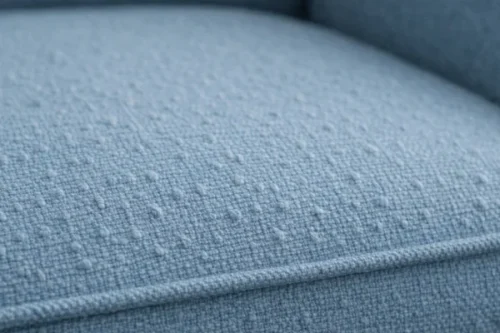
Basically, pilling boils down to three things: friction, fiber length, and the weave. Here is the breakdown of why your couch might be betraying you:
- Friction: The more you rub against a fabric, the more likely it is to pill. It’s just physics. You’ll usually see this first on the spots that get the most love, like the seat cushions or the armrests.
- Fiber Length: Think of this like hair. Shorter fibers slip out of the weave easier and ball up. Longer fibers stay put, which makes the fabric way more durable and keeps the surface smooth.
- Weave: This is about how tight the fibers are locked together. If you have a tight weave, those fibers aren’t going anywhere. Loose weaves? They are basically asking for trouble.
When these factors combine, they dictate just how fast your couch starts to look fuzzy.
Top Couch Materials That Resist Pilling
You don’t have to guess here. Certain fabrics are naturally better at fighting off those little fuzzballs just because of how they are made. If you want a durable couch, here are your best bets:
#1. Leather

Leather is the king of anti-pilling. Why? Because it doesn’t have yarns that can unravel. It’s just a smooth, solid surface that doesn’t trap anything, making it arguably the most durable option out there.
#2. Microfiber / Microsuede

These are synthetics, but they are the good kind. They use super tightly woven fibers that refuse to pill. Because the weave is so dense, fibers can’t break free, keeping the surface smooth for the long haul.
#3. Performance Polyester
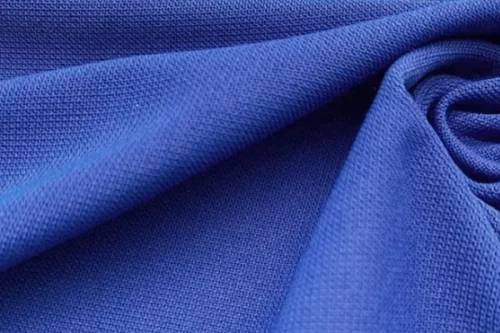
This isn’t your 1970s polyester. It’s engineered specifically to stop fiber breakage and takes a beating without showing it. It gives you a sturdy surface that resists pilling, which is perfect for a house that actually gets lived in.
#4. Olefin (Polypropylene)

Olefin is a synthetic powerhouse known for handling abrasion like a champ. The fibers are bound incredibly tight, so they don’t loosen up to form pills. Plus, it’s tough against stains.
#5. Linen

If you want natural, go with linen. It’s made from long fibers that are naturally strong. The tight weave and smooth texture make it a fantastic choice if you want something luxurious that won’t turn into a fuzz-fest.
#6. Wool and Long-Staple Wool

Wool is tough, but long-staple wool is even better because those long fibers hold together stronger. It’s resilient, soft, and naturally fights off pilling.
Rub Count and Fabric Durability
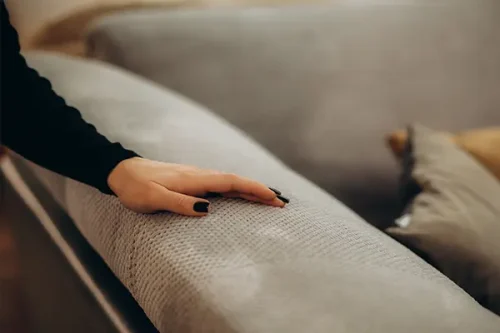
You might see the term “rub count” thrown around. It just measures how many times a fabric can be rubbed back and forth before it starts wearing out.
The rule of thumb is simple. Higher rub count equals better durability and less pilling. Fabrics that score high here can handle heavy use without losing their structure. For context, decent performance fabrics usually hit over 30,000 rubs, which keeps them pilling-resistant. If you go lower, expect pills to pop up faster. Sticking to high rub counts is the easiest way to ensure your couch stays pill-free.
Fabrics More Likely to Pill (What to Avoid)
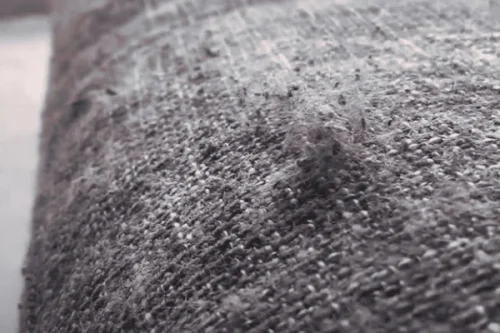
Some fabrics are just prone to pilling by nature, usually because of the fiber structure or just being lower quality. If you hate fuzz, steer clear of these:
- Low-Quality Synthetic Blends: If the blend is cheap, the fibers are likely short and weak. They break loose, pill up, and the fabric looks worn out way too fast.
- Short-Fiber Fabrics: As mentioned before, short fibers are the enemy. They aren’t secure in the weave, so a little friction pulls them right out. You see this a lot in cheap cottons or synthetics.
- Acrylic: It mimics wool, but it pills like crazy because the fibers aren’t bound tightly. It lacks the durability of the real thing and breaks down easily.
- Rayon: This semi-synthetic can be a headache, especially in blends. It doesn’t handle friction well and the fibers break down quick, leading to pills.
- Polyester Blends: Pure polyester can be great, but low-quality blends are often full of loose fibers. Stick to the high-quality stuff if you want to avoid issues.
Comparison Chart: Best vs. Worst for Pilling
Need a cheat sheet? Here is a quick look at how these fabrics stack up so you can make an informed choice.
How to Care for Your Couch to Reduce Pilling
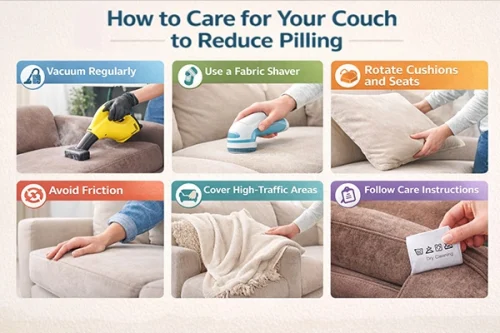
Even the best fabric needs a little help to stay looking new. Here are some practical ways to stop pilling before it starts:
- Vacuum Regularly: Dust and dirt act like sandpaper on your couch fibers. Using an upholstery attachment removes that grit and cuts down on the friction that causes pills.
- Use a Fabric Shaver: If you do see a few pills, don’t panic. Just grab a fabric shaver and gently buzz them off. It cleans up the look without hurting the couch.
- Rotate Cushions and Seats: Don’t sit in the exact same spot every day. Rotating your cushions helps spread the wear out evenly. This prevents one area from taking all the friction.
- Avoid Friction: Try not to rub constantly on the high-use spots like armrests. Too much friction snaps the fibers.
- Cover High-Traffic Areas: Throw a blanket or slipcover over the spots that get the most action. It protects the fabric underneath and extends its life.
- Follow Care Instructions: Seriously, read the tag. Some fabrics need special love, like professional cleaning, to keep their texture intact.
Choosing for Your Lifestyle

At the end of the day, the right fabric depends on how you actually live. Here is a quick guide based on your needs:
- For Families with Kids: You need something that can take a hit. Microfiber, performance polyester, or leather are your friends here. They wipe down easy and withstand the chaos. Look for high rub counts to handle the daily grind.
- For Homes with Pets: Claws and shedding are tough on furniture. Stick with leather or microfiber. They don’t trap hair and are super easy to clean. Avoid velvet or heavy textures that act like hair magnets.
- For Heavy Daily Use: If you basically live on your couch, durability is priority number one. Olefin and performance polyester are excellent because they resist wear while looking good. Go for tight weaves and high rub counts.
- For Light Use or Formal Spaces: If the couch is mostly for looks or formal guests, treat yourself to linen or wool. They feel luxurious and resist pilling, though they might need a bit more babying when it comes to cleaning.
- For Comfort and Style: Want a mix of everything? Microfiber or performance polyester give you that balance. They are soft, come in tons of colors, and hold up to everyday life. If you want natural, linen is breathable and soft, just be ready for the maintenance.


 English
 Spanish
 Portuguese
 Russian
 Arabic
 Japanese
 Korean
 German
 French
